
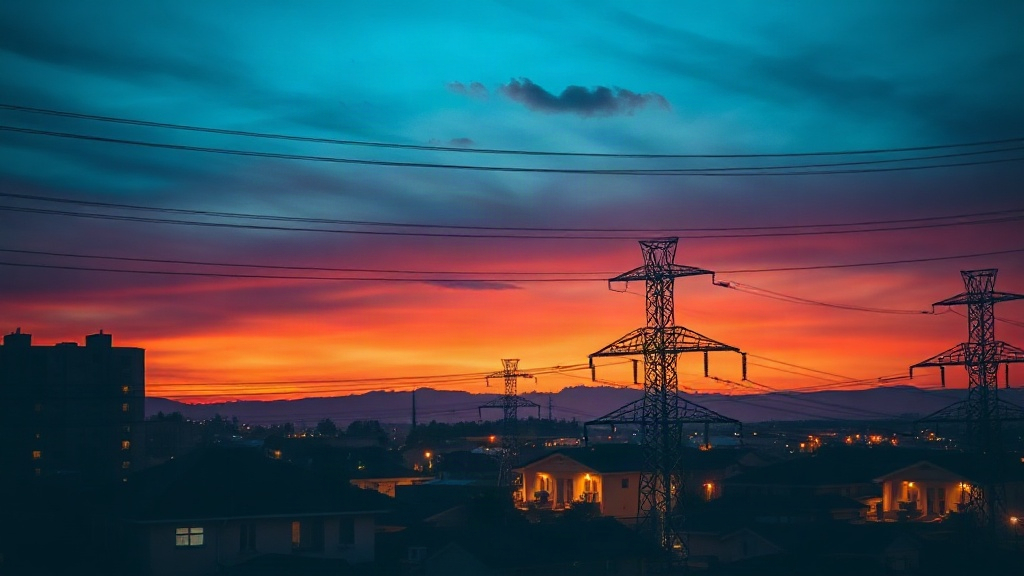
The hum of air conditioners has become the soundtrack of summer across much of the United States, but this week that hum carries an undercurrent of anxiety. As temperatures soar into the triple digits from the Midwest to the Mid-Atlantic, the nation's largest electric grid is being pushed toward its limits. The Department of Energy has warned that the risk of power outages is escalating, leaving millions of people wondering if the lights, and the AC, will stay on through the sweltering nights ahead.
This isn't just another hot spell. It's a stress test for an aging infrastructure system that was never designed for the kind of sustained, extreme heat that climate scientists say will become more common. And while grid operators are working around the clock to keep electrons flowing, the uncomfortable truth is that the margin between comfort and crisis has grown dangerously thin.
Why the Grid Is Under So Much Pressure
At the center of the current concern is the PJM Interconnection, the largest electric grid in the United States. Spanning 13 states and the District of Columbia, PJM serves approximately 67 million people, from the dense suburbs of Chicago to the bustling corridors of Washington, DC. It's a vast, intricate web of power plants, transmission lines, and substations that must balance supply and demand in real time, every second of every day.
Heatwaves attack that balance on two fronts. First, demand spikes as millions of air conditioners run at full blast, often simultaneously, creating a peak load that can exceed typical summer usage by 20 percent or more. Second, heat degrades the performance of the grid itself. Power plants become less efficient when cooling water is warm. Transmission lines sag and lose capacity. Transformers, the unsung heroes of the grid, can overheat and fail. It's a cruel feedback loop: the hotter it gets, the harder it is to move electricity, just when people need it most.
PJM has already issued hot weather alerts and called on utilities to postpone non-essential maintenance. The grid operator has also activated demand response programs, asking large industrial users to voluntarily reduce consumption during peak hours. But these measures only buy so much time. If demand outpaces supply, the last-resort tool is rolling blackouts, controlled outages that rotate through neighborhoods to prevent a catastrophic, cascading failure of the entire system.
The Human Cost of a Blackout in a Heatwave
For many people, a power outage during a heatwave is an inconvenience. For others, it's a matter of life and death. Extreme heat is already the deadliest weather-related hazard in the United States, killing more people annually than hurricanes, floods, and tornadoes combined. A blackout during a heatwave removes the primary defense, air conditioning, and leaves vulnerable populations, the elderly, the chronically ill, those without access to cooling centers, exposed to dangerous indoor temperatures.
Consider the urban heat island effect, where concrete and asphalt absorb and re-radiate heat, keeping nighttime temperatures elevated. In cities like Philadelphia, Baltimore, and Washington, DC, low-income neighborhoods often lack tree cover and have older housing stock with poor insulation. When the power goes out, these communities suffer disproportionately. A 2021 study published in Environmental Research Letters found that blackouts during heat events could more than double the rate of heat-related mortality in some cities.
Hospitals and nursing homes are required to have backup generators, but those generators are not infallible, and they typically cover only critical loads. Home medical equipment, such as oxygen concentrators or dialysis machines, depends on reliable electricity. For the millions of Americans who rely on such devices, a blackout is not an abstract risk; it's a terrifying possibility that requires meticulous planning and, often, help from neighbors and community organizations.
Is the Grid Ready for a Hotter Future?
The current heatwave is not an anomaly; it's a preview. According to the National Oceanic and Atmospheric Administration, the frequency and intensity of heatwaves have increased in recent decades, and that trend is expected to continue. The grid, however, was largely built in the 20th century, designed for a climate that no longer exists. Upgrading it is a monumental task, requiring billions of dollars in investment and years of construction.
Some progress is being made. The Inflation Reduction Act of 2022 included significant funding for grid modernization, including new transmission lines and smart grid technologies. Renewable energy sources, particularly solar, have helped meet peak demand on hot, sunny days. Battery storage is growing, though it still accounts for a tiny fraction of grid capacity. Demand response programs, which incentivize consumers to shift their energy use, have proven effective in shaving peak demand. But these efforts are incremental, and the challenge is accelerating.
There are also hard questions about the reliability of traditional power plants during extreme heat. Coal and nuclear plants require large amounts of water for cooling, and during droughts or heatwaves, that water can be too warm or too scarce. Natural gas plants are less water-intensive but can experience reduced output at high temperatures. The result is that during the hottest hours, some generators may be forced to curtail production, just when they're needed most.
Grid operators are not standing still. PJM has implemented capacity market reforms to ensure adequate resources are available during peak periods. The North American Electric Reliability Corporation, which sets reliability standards, has issued increasingly urgent warnings about summer resource adequacy. But the fundamental problem remains: the grid's margin for error is shrinking, and the weather is becoming less forgiving.
What You Can Do to Reduce Strain and Stay Safe
While the big-picture solutions require policy and investment, individual actions can make a difference, both in reducing the risk of blackouts and in staying safe if one occurs. Here are practical steps you can take during a heatwave:
- Set your thermostat higher during peak hours (typically 3 p.m. to 7 p.m.) and use fans to circulate air. Even a few degrees can reduce your AC's energy draw significantly.
- Avoid using major appliances like ovens, dishwashers, and dryers during the hottest part of the day. Grill outside or use a microwave instead.
- Close blinds and curtains on sun-facing windows to reduce solar heat gain. If you have a programmable or smart thermostat, set it to pre-cool your home before peak hours and then ease off.
- Check on neighbors, especially older adults and those with health conditions. A simple visit or phone call can ensure they have a plan for staying cool.
- Know your local cooling centers. Many cities open public buildings, libraries, and community centers during extreme heat. Keep a list of locations and their hours.
- Prepare an emergency kit with flashlights, batteries, a battery-powered fan, bottled water, and non-perishable food. If you rely on medical equipment, have a backup power plan in place.
If a blackout does occur, keep your refrigerator and freezer closed to preserve food. Unplug sensitive electronics to avoid damage from power surges when electricity is restored. And drink plenty of water, even if you don't feel thirsty; dehydration is a silent killer in the heat.
The Bigger Picture: A Warning We Should Heed
The current situation is a stark reminder that the grid is not an abstract system; it's the backbone of modern life. When it fails, everything from water treatment to cell phone service can go down. The economic costs are enormous, but the human costs are incalculable. As the planet continues to warm, events like this week's heatwave will become more frequent and more severe. The question is whether we will treat them as wake-up calls or as the new normal.
Investing in grid resilience is not a luxury; it's a necessity. That means more transmission lines to move power from where it's generated to where it's needed, more distributed energy resources like rooftop solar and community batteries, and smarter grid management that can respond to real-time conditions. It also means addressing the underlying drivers of climate change, because no amount of grid hardening will keep up with a planet that is fundamentally out of balance.
For now, the focus is on getting through the next few days. Grid operators are on high alert, utilities are mobilizing crews, and communities are opening cooling centers. But the longer-term challenge is clear: we must build an electricity system that can keep us safe in a hotter world. The alternative is a future where every heatwave brings the threat of darkness, and that is a risk we cannot afford to take.
Frequently Asked Questions
What is the PJM Interconnection and why is it important?
The PJM Interconnection is a regional transmission organization that coordinates the movement of wholesale electricity in all or parts of 13 states and the District of Columbia. It is the largest electric grid in the United States, serving about 67 million people. During a heatwave, PJM's role becomes critical because it must balance supply and demand across a vast area, and any imbalance can lead to rolling blackouts to protect the grid from a total collapse.
How likely is a blackout during this heatwave?
The risk is elevated, but not certain. The Department of Energy has warned of increased potential for outages, and grid operators have issued alerts. However, blackouts are typically a last resort. Grid operators will first use demand response, import power from neighboring regions, and ask consumers to conserve. The likelihood depends on how high demand spikes, whether any power plants unexpectedly go offline, and how well conservation efforts work.
What should I do if the power goes out during extreme heat?
If you lose power, stay hydrated, move to the coolest part of your home (often a basement), and avoid opening the refrigerator or freezer. If the heat becomes dangerous, go to a cooling center, a friend's house, or a public building with air conditioning. Never leave children or pets in a parked car, even for a few minutes. If you or someone you know shows signs of heat exhaustion (heavy sweating, weakness, dizziness, nausea), seek medical help immediately.
Can renewable energy help prevent future blackouts during heatwaves?
Yes, but it's not a silver bullet. Solar power is particularly effective during hot, sunny days because it generates the most electricity when demand is highest. However, solar output drops in the evening when demand often peaks. Battery storage can bridge that gap, but it's not yet deployed at a scale large enough to fully offset the loss of traditional generation. A mix of renewables, storage, energy efficiency, and grid upgrades is needed to build resilience.
Why are heatwaves becoming more frequent and intense?
Climate change, driven by the burning of fossil fuels, is causing global temperatures to rise. This shifts the distribution of weather events, making extreme heat more likely and more severe. Heatwaves that were once rare are now occurring more often, lasting longer, and reaching higher temperatures. This trend is projected to continue until greenhouse gas emissions are significantly reduced.