
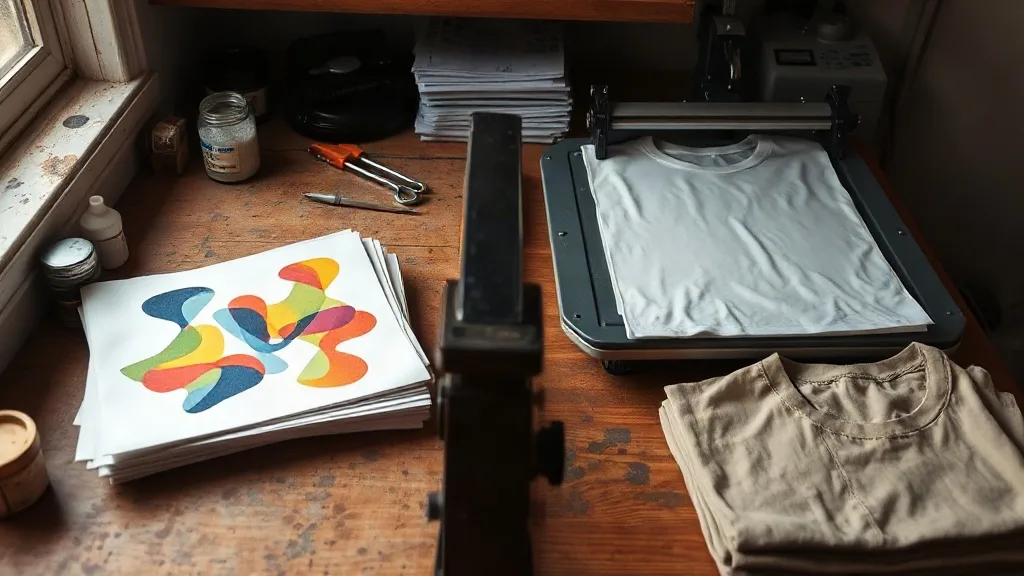
When a customer walks in with six hoodies, three of them navy, one a poly blend, and asks for full-color artwork by Friday, the old answers stop working. Screen printing setup costs eat the margin. Vinyl gets fiddly on textured fabric. That is usually the moment a shop owner starts looking into dtf transfers, and for good reason: the process handles small quantities, complex artwork, and awkward materials without a per-color setup charge.
This guide is written from the perspective of someone who has spent time behind a heat press, not from a vendor brochure. Below you will find how the process actually works, where it fits in a real production schedule, what to inspect before you commit to a supplier, and the mistakes that cause most failed presses.
What DTF Actually Is, Stripped of the Marketing
dtf stands for direct to film. The name describes the workflow rather than the finished product. A printer lays down water-based pigment ink onto a coated PET film, then applies a thermoplastic powder adhesive to the wet ink. The powder fuses into the ink under heat, and what you end up with is a flexible, pre-formed transfer you can store, ship, and press later.
The important distinction is that the design is printed in full color in a single pass. There is no separation into spot colors, no mesh count to choose, no emulsion to burn. A photograph, a gradient, a twelve-color illustration, and a one-color logo all go through the same printer with the same setup effort. That is the entire economic argument, and it holds up in practice.
How it differs from DTG and vinyl
Direct to garment printing sprays ink straight onto a pretreated shirt. It produces a soft hand and excellent detail, but it is tied to the garment, so you cannot print a batch of transfers and store them. Vinyl cutting is fast and cheap for simple shapes, but every additional color means another layer of material and another pass under the press, and fine detail in small text becomes a real constraint.
DTF sits between the two. You get the color freedom of digital printing plus the logistics of a decal. Transfers keep for months in a dry, dark drawer, which means you can print a run of gang sheet designs overnight and press them as orders arrive instead of printing to demand.
Where DTF Transfers Fit in a Working Shop
Not every job should go through film. Being honest about the fit saves you from the disappointment that comes with forcing a process into the wrong application.
- Short runs and one-offs: A single custom shirt for a birthday or a five-piece team order is where DTF wins outright. There is no minimum order and no setup to amortize.
- Complex or photographic artwork: Gradients, halftones, and multi-color logos press cleanly because the printer handles color mixing, not the operator.
- Problem fabrics: Polyester, nylon, canvas, and blends that dye-migrate under DTG are far more forgiving with a film transfer, especially with a low-bleed powder.
- Non-garment items: Tote bags, aprons, and canvas pouches press well provided the surface tolerates heat and is reasonably flat.
Where DTF struggles is on large solid areas of ink over very stretchy, thin fabric, and on items that cannot take 300 degrees Fahrenheit. Very high-volume basic tee runs still belong on a screen press, because per-unit cost at scale beats film every time.
What to Check Before You Buy Transfers
Quality varies enormously between suppliers, and the differences are not always visible in a photo. When you search for dtf transfers near me, the results will look similar. Here is what separates a good supplier from a frustrating one.
Powder type and ink load
Ask directly whether the supplier uses a standard or low-bleed powder. Low-bleed powder costs more but prevents the dye migration that turns a white design pink after a few weeks on a red polyester polo. Ink load matters too: transfers that are printed too heavy feel like a plastic patch, while under-inked transfers crack early. A good transfer has visible, even texture on the adhesive side and no bare patches.
Film and backing consistency
Cheap film curls at the edges and grabs the press platen, which is how you get a design shifted two millimeters off center. Check that the backing peels cleanly at a consistent temperature and that the film does not wrinkle when stored flat. If you are buying gang sheets, confirm the spacing between designs, because tight nesting saves money until you are trimming with a blade and nicking the artwork.
Color accuracy and white laydown
Request a physical sample with a white base, a mid-tone gradient, and fine text under 10 point. Print shops that care about their reputation will send one. Look at whether the white is opaque enough to hold on a dark garment and whether small text stays legible after pressing rather than filling in.
The Press Settings That Actually Matter
Most failed transfers are pressing errors, not product defects. The numbers below are starting points, not gospel, because every press runs a little hot or cold and every fabric behaves differently.
- Temperature: 300 to 320 degrees Fahrenheit for most garments. Polyester blends lean toward the lower end to reduce shine and dye migration.
- Pressure: Medium to firm, enough that you can see the fabric texture through the transfer. Light pressure leaves adhesive that washes away.
- Time: 10 to 15 seconds for the press, then a cold or warm peel depending on the film. Follow the supplier's peel instruction, since peeling a cold-peel film while hot can tear the ink layer.
- Second press: After peeling, cover with parchment or a Teflon sheet and press again for 5 to 8 seconds. This step is skipped constantly and it is the single biggest reason transfers lift at the corners after washing.
Pre-press the garment for a few seconds to remove moisture. A damp shirt traps steam under the film and produces bubbles that never flatten out.
Storage, Reorders, and Keeping Customers Happy
Transfers are inventory, and they should be treated like it. Store them flat, in a sealed bag or drawer, away from direct sun and humidity. Most films stay usable for six to twelve months; humidity is the real enemy, because damp adhesive turns gummy and clogs the peel.
For repeat clients, keep their gang sheet files and a note on the exact film and powder used. When a school orders forty shirts in September and another twenty in January, matching the original transfer means the second batch looks identical to the first. That consistency is what turns a one-time order into a standing account, and it costs you nothing but a folder and a label.
Finally, talk to customers about care. Washing inside out in cold water and tumble drying low will keep a well-pressed transfer looking good for dozens of cycles. Handing over a small care card with the order cuts down on complaints and makes the shop look like it knows what it is doing.
Frequently Asked Questions
How long do DTF transfers last on a shirt?
With correct pressing and normal care, expect the print to outlast the garment's useful life for most casual wear. The failure points are almost always a skipped second press, too little pressure, or washing in hot water with a rough load. A properly applied transfer on a cotton tee typically holds color and adhesion through fifty or more wash cycles.
Can I use DTF transfers on 100 percent polyester?
Yes, and it is one of the better options for polyester because the film acts as a barrier between the ink and the fabric. Use a low-bleed powder and press at the lower end of the temperature range to avoid scorching or shine. Always test a scrap piece first, since some poly fabrics are more heat sensitive than others.
Do I need a special printer to make my own transfers?
You need a printer that accepts DTF pigment ink and a powder shaker unit, or you can buy ready-made transfers from a supplier. Most small shops start by ordering transfers and only invest in in-house printing once volume justifies the equipment, the ink, and the learning curve.
Why is my transfer peeling at the edges after washing?
Edge lifting usually points to uneven pressure, a cold spot on the platen, or a missed second press. Trim the transfer close to the artwork, make sure the garment is flat and dry, and press the peeled design again under a cover sheet. If it still lifts, the adhesive may be under-cured, which is a supplier issue worth raising.
How should I store unused transfers?
Keep them flat in a resealable bag, away from heat, sunlight, and damp rooms. Do not stack heavy items on top, because creased film leaves a visible line in the finished print. Label the bag with the date and design name so you are not guessing six months later.