
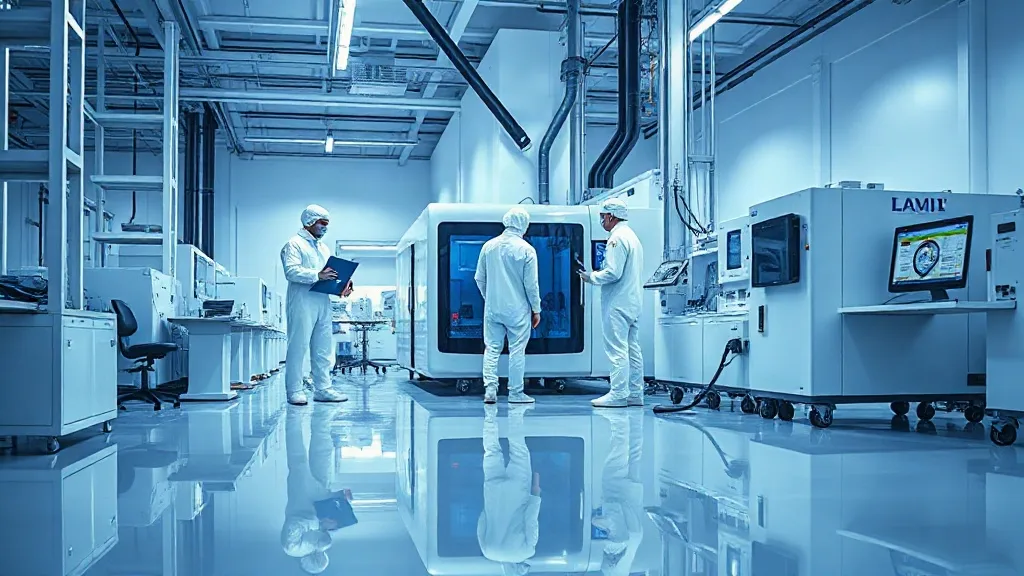
In a recent episode of the Dwarkesh Podcast, Intel's Chief Technology Officer Pushkar Ranade made a striking admission: even if Intel wanted to, it couldn't produce ten times more leading-edge wafers. The reason? The world simply doesn't have the chipmaking tools to make it happen. Ranade told host Dwarkesh Patel that doubling output is about the limit, a statement that underscores the immense complexity and capital intensity of the semiconductor industry. Patel filmed the conversation during a two-day tour of Intel's most advanced fabrication plant, giving viewers a rare glimpse into the heart of chip manufacturing.
Ranade's comment isn't just a casual remark; it's a reality check for anyone who believes that scaling chip production is just a matter of writing bigger checks. The semiconductor supply chain is a marvel of engineering, but it's also a bottleneck. From lithography machines to etching equipment, every step of the process relies on specialized tools that are themselves wonders of precision engineering. And right now, those tools are in short supply.
The Tooling Bottleneck: Why Can't We Just Make More?
To understand why a 10x increase is unrealistic, you have to look at the supply chain. The most advanced chips are made using extreme ultraviolet (EUV) lithography, a technology that uses tiny wavelengths of light to print intricate patterns on silicon wafers. EUV machines are built by a single company, ASML, and each one costs upwards of $150 million. They're incredibly complex, requiring thousands of components from hundreds of suppliers. ASML can only produce a limited number per year, and the waiting list is long.
But EUV is just one piece of the puzzle. A modern fab needs hundreds of different tools for deposition, etching, cleaning, and inspection. Each tool is highly specialized, and many are made by only a handful of companies. Scaling up production of these tools takes years, not months. Building a new fab itself takes billions of dollars and several years. So even if demand skyrockets, the industry can't just flip a switch and increase output.
Ranade's point is that the constraint isn't just money; it's the physical capacity to build the machines that build the chips. "The world lacks the tools to 10x chip output," he said, and that's a fundamental limit. Doubling output, he suggested, is more realistic, but even that requires significant investment and time.
Why This Matters: The Stakes for the Global Economy
Semiconductors are the backbone of the modern economy. They power everything from smartphones and laptops to cars and data centers. The COVID-19 pandemic exposed the fragility of the chip supply chain when a surge in demand for electronics collided with lockdown-induced production slowdowns, leading to shortages that crippled industries like automotive. Since then, governments and companies have poured billions into expanding chip production.
The U.S. CHIPS Act, the European Chips Act, and similar initiatives in Japan and South Korea aim to boost domestic manufacturing and reduce reliance on a few key producers, particularly in Taiwan and South Korea. Intel, as one of the few companies with leading-edge manufacturing capabilities, is a major beneficiary of these efforts. But Ranade's comments suggest that even with all this investment, the industry's ability to scale is limited by the tooling supply chain.
This has implications for national security, economic competitiveness, and technological progress. If we can't produce enough chips, we can't meet the growing demand for AI, cloud computing, and other advanced technologies. The bottleneck could slow innovation and exacerbate geopolitical tensions as countries compete for access to chips.
What Is Intel Doing to Overcome the Challenge?
Intel is not sitting idle. The company is investing heavily in new fabs in Arizona, Ohio, and Germany, and it's also working on advanced packaging technologies that can improve performance without necessarily shrinking transistors. But Intel's success depends on the broader ecosystem. It needs ASML to deliver more EUV machines, Applied Materials and Lam Research to supply etching and deposition tools, and a host of other suppliers to ramp up production.
Ranade's remarks also highlight the importance of innovation in tooling. If we can't scale existing tools, maybe we can develop new ones that are more efficient or easier to produce. For example, nanoimprint lithography or directed self-assembly are alternative patterning techniques that could reduce reliance on EUV. But these are still in development and not yet ready for high-volume manufacturing.
Another angle is chip design. If we can't make more chips, we can make them more powerful and efficient. Advanced packaging, chiplets, and specialized architectures can deliver performance gains without necessarily increasing the number of wafers. Intel is pursuing these avenues, but they are not a silver bullet.
The Bigger Picture: A New Era of Constraints
The semiconductor industry has always been cyclical, with periods of shortage and oversupply. But the current constraints feel different. The demand for chips is insatiable, driven by AI, 5G, and the Internet of Things. At the same time, the physical limits of manufacturing are becoming more apparent. Moore's Law may not be dead, but it's certainly slowing down.
Ranade's interview is a reminder that technology doesn't advance in a vacuum. It's shaped by supply chains, economics, and geopolitics. The chip shortage of the past few years was a wake-up call, but the underlying issues remain. Building a resilient and scalable semiconductor ecosystem will require not just money, but also time, talent, and international cooperation.
As Patel's podcast tour of Intel's fab showed, the process of making chips is awe-inspiring. It's also fragile. The fact that we can't simply 10x output is a testament to the complexity of the technology and the importance of the companies that make it possible. It's a story of innovation, but also of limits.
Frequently Asked Questions
What did Intel's CTO say about chip production?
Pushkar Ranade said that the world lacks the tools to increase leading-edge chip output tenfold, and that doubling production is about the maximum feasible increase.
Why is it so hard to increase chip production?
The semiconductor manufacturing process relies on highly specialized tools, such as EUV lithography machines, which are produced by only a few companies and have long lead times. Scaling up production of these tools is a major bottleneck.
What are the implications for the tech industry?
Limited chip output could slow innovation in AI, cloud computing, and other advanced technologies, and exacerbate geopolitical tensions over access to semiconductors.
Is Intel doing anything to address this?
Intel is investing in new fabs and advanced packaging technologies, and it is also exploring alternative patterning methods. However, these efforts depend on the broader supply chain.