
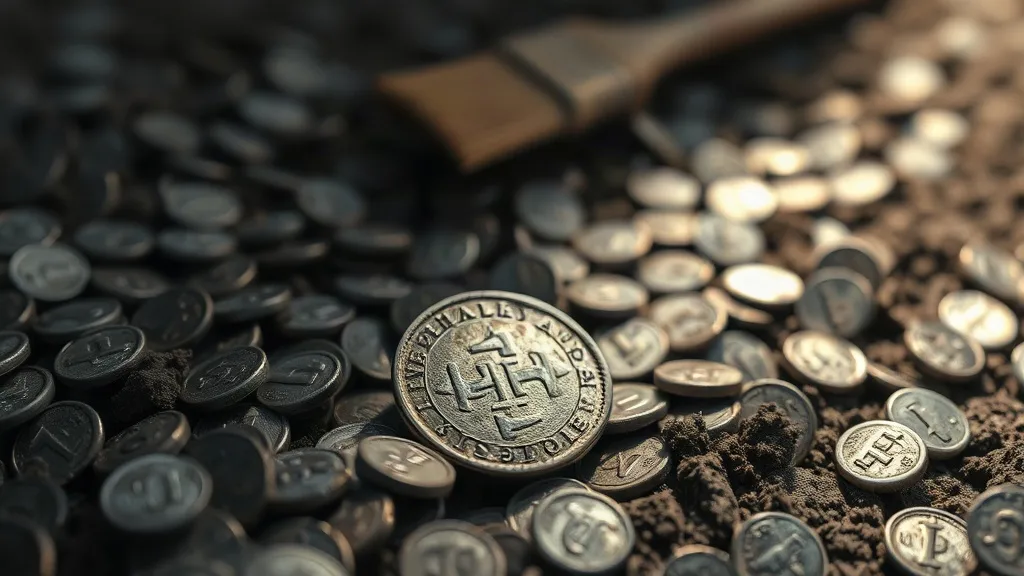
Most archaeological finds announce themselves with a single dramatic object: a sword, a ship, a golden mask. This one is quieter. In Norway, a cache of roughly 5,500 Viking Age coins has come to light, and the headline number is almost beside the point. Buried inside that mass of silver is a single coin so unusual that researchers have already reached for the phrase "national treasure" before the dust has even settled.
The coin was struck under Olaf II Haraldsson, the king later canonized as Saint Olaf and remembered as the ruler who consolidated Christianity in Norway. Fewer than 20 coins minted during his reign have ever been found. That figure alone makes any new specimen a significant event for numismatists, the specialists who study coins as historical documents.
Why One Coin Outshines a Hoard of Thousands
The instinct when hearing about a hoard is to focus on volume. Thousands of coins sounds like the story. In practice, Viking Age silver hoards are often dominated by foreign currency: Anglo-Saxon pennies, Islamic dirhams, German and Frankish pieces that arrived through trade, tribute, and plunder. A hoard is a snapshot of what was circulating, not a catalog of what was made locally.
That context is what makes the Olaf coin stand apart. It is not merely old or shiny. It is evidence of a specific minting authority operating in a specific place at a specific moment, and the survival rate for that evidence is extraordinarily low.
"We can almost imagine Olaf himself holding this coin in his hand," one researcher observed. It is the kind of line that could sound like promotional flourish, but in this case it points to something real. A coin is a direct physical product of the state that issued it. When a king's coinage barely survives, historians lose a primary source for questions about economy, administration, and political legitimacy.
What Makes a Coin Rare
Rarity in numismatics rarely comes down to age. A Roman coin two centuries older than the Olaf piece might exist in the tens of thousands. Several factors converge to make certain issues nearly vanish:
- Short minting windows. A ruler who issues coins for only a few years leaves a small footprint, especially if production was limited to one or two workshops.
- Meltdown economics. Silver was wealth by weight. Coins were routinely melted and re-struck, which means most of any given issue was destroyed within a generation or two.
- Limited circulation. Currency that never traveled widely is less likely to end up in the buried hoards that later generations dig up.
- Survival bias in the archaeological record. What we find is not what existed. It is what happened to be lost, hidden, and never recovered.
The Olaf coin sits at the intersection of all four. That is why the count of known examples stays under 20 rather than under 200.
The Hoard as a Historical Document
Beyond the star piece, the broader assemblage matters. A deposit of 5,500 coins is a substantial sample of the Viking Age economy, and its composition can tell researchers about trade routes, weight standards, and how silver moved across northern Europe.
Hoards were rarely bank deposits in the modern sense. People buried silver when they feared losing it: during unrest, before travel, in the face of attack. Many were never retrieved, which is precisely why they survive. Each one is a frozen moment of anxiety and hope, sealed and then abandoned.
For Norway specifically, the find adds texture to a period when royal power was still being assembled from competing chieftaincies and regional interests. Coinage was one of the tools of that consolidation. Issuing your own coins signaled that you controlled a mint, commanded enough silver, and expected your authority to outlast you.
Olaf II and the Politics of Silver
Olaf II Haraldsson ruled in the early eleventh century, a span marked by conflict, Christianization, and shifting alliances across Scandinavia. He was not a distant legend during his lifetime; he was a contested political figure whose reign ended violently, and whose later sainthood reshaped his reputation entirely.
His coins carry weight beyond their metal. They are contemporaneous objects from a reign that is otherwise documented largely through later, often ideologically motivated texts. A single surviving coin can corroborate or complicate the written record in ways that a chronicle written a century afterward cannot.
That is the real reason researchers reached for the phrase "national treasure." The coin is not valuable because of its silver content. It is valuable because it is one of a handful of physical witnesses to a formative chapter in Norwegian statehood.
What Happens Next
Finds of this scale typically move into a documentation and conservation phase before any public display. Coins need cleaning, cataloging, and comparison against known specimens. Metallurgical analysis can reveal where the silver originated. Die studies, which compare the stamps used to strike coins, can link individual pieces to specific workshops and even specific pairs of dies.
For the public, the appeal is simpler. There is something compelling about the scale of the hoard paired with the singularity of one small object. Thousands of coins tell you about a society. One coin tells you about a person, and about the fragility of the record that preserves him.
Researchers have been careful not to overstate what the find proves. The coin does not rewrite the history of Olaf's reign on its own. What it does is narrow a gap, adding a tangible artifact to a reign that has left remarkably little physical trace. In a field where a single new specimen can shift the boundaries of what is known, that is a substantial contribution.
Frequently Asked Questions
How many coins from Olaf II Haraldsson's reign have been found?
Fewer than 20 coins minted under Olaf II Haraldsson are known to have survived. The newly discovered specimen adds to that very short list, which is why researchers have described it in unusually strong terms.
Why are Viking Age coins so often found in buried hoards?
Silver was the primary store of wealth in the Viking Age, and people buried it during periods of danger or before travel. Many hoards were never retrieved by their owners, leaving them preserved until modern excavation.
What does the term numismatist mean?
A numismatist is a specialist who studies coins and currency as historical sources. Beyond identifying and dating pieces, numismatists use coins to investigate trade, political authority, and economic systems.
Does a rare coin like this have monetary value?
National heritage laws in Norway and similar countries typically place significant archaeological finds under state protection. The coin's importance is historical and scientific rather than commercial, and its fate is usually determined by museum and heritage authorities rather than the open market.
What makes this coin different from the other 5,499 in the hoard?
The vast majority of coins in a typical Viking Age hoard were foreign issues that circulated through trade. The Olaf coin is a product of local royal authority, and its scarcity reflects a short minting period and the widespread melting of silver that destroyed most such pieces.