
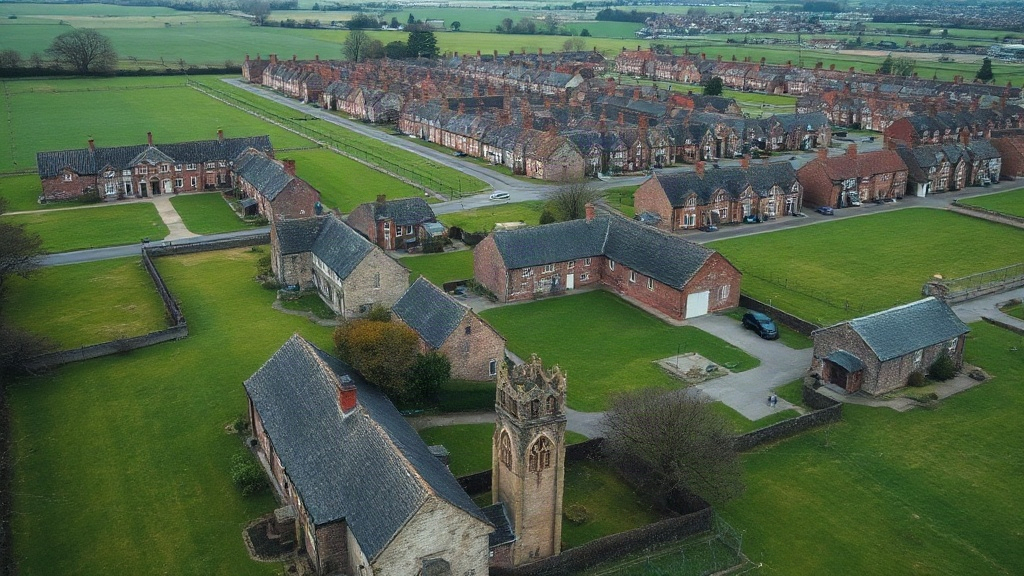
The village of Piddington has sent a message that will echo far beyond its quiet lanes. In a symbolic referendum held over the weekend, residents voted overwhelmingly to "leave the United Kingdom" in protest at government plans to house up to 1,256 male asylum seekers in a nearby former military barracks. The vote has no legal force, but it has thrust this small Oxfordshire community into a national debate about immigration, rural identity, and the limits of local consent.
The result was decisive: 78% of those who took part backed the motion to declare independence from the UK, with a turnout of 61% of eligible voters. Organisers had framed the ballot as a way to express frustration with what they see as a top-down decision that ignores the character and capacity of a village of just over 1,000 people. "We are not against helping refugees," said one local campaigner, "but dropping 1,256 single men into a village with no infrastructure, no transport links, and no consultation is not a plan. It is an imposition."
Why Piddington is angry
The source of the anger is a proposal by the Home Office to use the disused Bullingdon Barracks, located on the edge of Piddington, as accommodation for asylum seekers. The site has been empty for years, and the government argues that it offers a cost-effective way to deal with the backlog of asylum claims while reducing reliance on hotels. But for many residents, the plan feels like a betrayal of the unwritten contract between rural communities and the state.
Piddington is a village with one pub, a village hall, a small primary school, and no shop. The nearest town, Bicester, is a twenty-minute drive away. There is no railway station, and the bus service is sparse. The idea of adding more than a thousand young men, many of whom will have experienced trauma and will need language classes, healthcare, and legal support, seems to locals like trying to fit a city into a thimble.
The referendum itself was organised by a group calling itself Piddington First. They collected signatures from more than half the village's adult population to force the vote, which was held in the village hall and overseen by independent volunteers. The question on the ballot paper was deliberately provocative: "Should the Parish of Piddington declare independence from the United Kingdom until such time as the Government withdraws its plans for an asylum centre at Bullingdon Barracks?" The answer, according to the count, was a resounding yes.
A symbolic act with real consequences
No one in Piddington seriously expects the village to secede. The vote is not recognised by any legal authority, and the parish council has no power to alter national borders. But the organisers are savvy enough to know that symbols matter. The vote has already generated headlines across the country, and it has forced local MPs and the Home Office to respond. In that sense, it has already achieved one of its goals: to make the voices of rural residents impossible to ignore.
Local councillors have been quick to distance themselves from the more theatrical aspects of the campaign while acknowledging the genuine concerns behind it. "The idea of independence is a stunt," said one district councillor, "but the frustration is real. People feel they have been kept in the dark, and they are worried about the impact on services, on safety, and on the character of the place they call home."
The Home Office has said that the use of former military sites is "a practical and humane way to provide safe accommodation" while asylum claims are processed. It also points out that such sites are already used elsewhere in the country, and that security and support services will be provided. But for many in Piddington, these assurances ring hollow. They point to examples in other rural areas where the sudden arrival of large numbers of asylum seekers has strained local GPs, schools, and voluntary groups, and where residents have reported feeling uneasy about the change.
The wider context: asylum policy and rural England
The Piddington vote is not an isolated incident. Across England, there has been a wave of local protests against the use of hotels, former care homes, and military bases to house asylum seekers. In some cases, these protests have been peaceful and well organised; in others, they have been marred by far-right groups seeking to exploit local grievances. The government has accused some opponents of the plans of "scaremongering," while campaigners say they are simply standing up for their communities.
The number of asylum seekers in the UK has risen sharply in recent years, driven by conflicts in the Middle East, Africa, and elsewhere. The backlog of cases awaiting a decision has also grown, meaning that many people are left in limbo for months or even years. The government has promised to speed up processing and to increase the use of "large-scale accommodation sites" to reduce the cost of housing people in hotels. But the choice of sites has often been controversial, with local authorities complaining that they were not consulted and that the sites are unsuitable.
In Piddington, the sense of grievance is compounded by the feeling that the village is being asked to bear a burden that wealthier, better-connected areas would never accept. "If this were a village in the Cotswolds or the Chilterns, there would be uproar in the national press," said one resident. "But because we are a small, working-class village, we are expected to just get on with it." Whether or not that perception is fair, it is widely held, and it has fuelled the anger behind the referendum.
What happens next?
The Home Office has not yet made a final decision on the Bullingdon Barracks site. The proposal is still at the consultation stage, and a formal planning application may be required. The parish council has said it will continue to oppose the plan "through all available channels," and the local MP has promised to raise the issue in Parliament. But the symbolic vote has already changed the dynamic. It has shown that a small community can generate national attention, and it has given other villages a template for protest.
Some commentators have dismissed the vote as a stunt, pointing out that "leaving the UK" is not a serious proposition. But that misses the point. The referendum was never about secession; it was about making a statement. In that, it has succeeded. The question now is whether the government will listen, or whether the anger in Piddington will be repeated in other rural communities that feel left behind by decisions made in Whitehall.
For the people of Piddington, the vote was a way of saying: we will not be ignored. Whether the government heeds that message remains to be seen. But one thing is certain: the village has made its voice heard, and the debate about asylum housing in rural England will never be quite the same again.
Frequently Asked Questions
Is Piddington really leaving the UK?
No. The vote was purely symbolic and has no legal effect. It was organised by a local campaign group to protest against government plans to house asylum seekers near the village. The parish council has no power to change national borders.
What are the plans for Bullingdon Barracks?
The Home Office has proposed using the disused Bullingdon Barracks near Piddington to accommodate up to 1,256 male asylum seekers while their claims are processed. The site has been empty for years, and the government says it would be a cost-effective alternative to using hotels.
Why are residents opposed to the asylum centre?
Residents argue that the village lacks the infrastructure to support such a large number of people. Piddington has no shop, no railway station, and a very limited bus service. They also say they were not properly consulted about the plans and that the decision was imposed from above.
Has the Home Office responded to the vote?
The Home Office has said that using former military sites is a "practical and humane" way to provide accommodation for asylum seekers. It has not commented directly on the Piddington vote, but it has said that security and support services will be provided at any such site.
Will other villages hold similar votes?
It is possible. The Piddington vote has attracted national attention, and campaigners in other rural areas have expressed interest in holding similar symbolic ballots. However, each situation is different, and the government is likely to face further legal and political challenges over its asylum accommodation plans.