
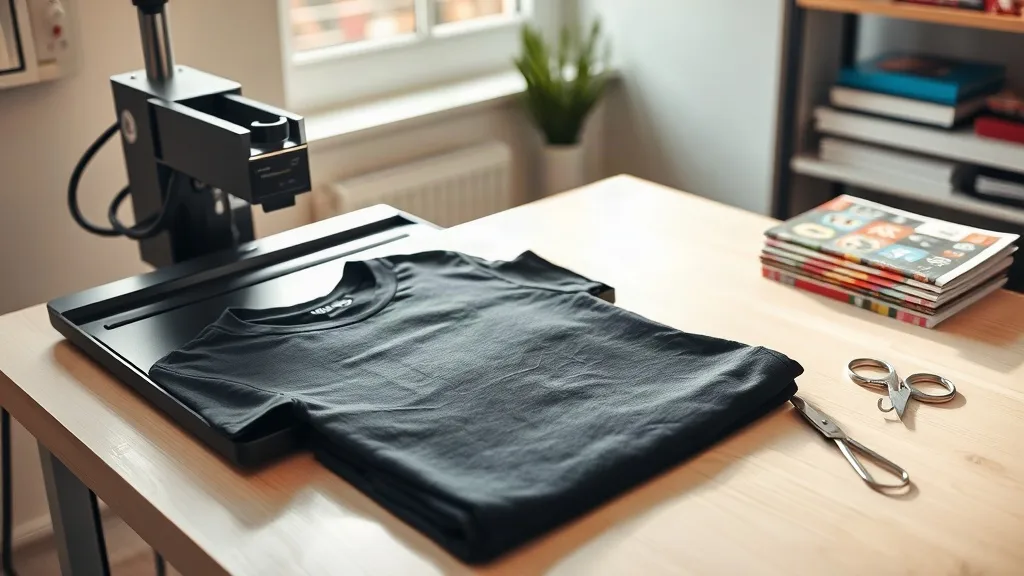
Walk into most small print shops on a Monday morning and you will find the same scene: a rack of garments waiting for a quote, a customer who wants twelve shirts with a photo on the chest, and a screen press sitting idle because the job is too small to justify burning screens. That gap between what customers ask for and what a shop can profitably produce is exactly where dtf transfers earn their place. They turn a job that used to be a polite decline into a same-week order, and they do it without adding a second press to the floor.
Why Short-Run Full-Color Jobs Break Traditional Workflows
Screen printing rewards repetition. Set up five colors, run three hundred shirts, and the per-piece cost settles into something comfortable. Set up five colors and run twelve shirts, and the math collapses. You still pay for emulsion, film, ink, reclaim, and the two hours of press time it takes to dial in registration. The customer, meanwhile, is comparing your quote to a print-on-demand website that charges per shirt with no setup fee at all.
Heat transfer vinyl solves part of the problem, but only part. Vinyl is great for names, numbers, and simple one-color shapes. Ask it to reproduce a gradient, a watercolor logo, or a photograph, and you are back to layering multiple colors and hoping the edges line up. That is the ceiling most shops hit right before they start turning away work.
DTF transfers lift that ceiling. A design is printed onto a special film with water-based pigment inks, dusted with an adhesive powder, and cured. The result is a sheet you can cut with scissors, store in a drawer, and press onto cotton, polyester, blends, canvas, and even some nylon. Full color, no setup, no minimum quantity worth worrying about.
What Changed When Shops Started Keeping DTF On Hand
The first difference most owners notice is not technical, it is behavioral. When quoting stops being a negotiation about volume, the front counter starts saying yes more often. A customer walks in for one hoodie with a detailed illustration. Instead of explaining minimums, you pull a transfer, press it for forty seconds, and hand over the finished piece. That single interaction often turns into a relationship: the same customer comes back for team orders, event shirts, and staff uniforms because you were the only shop that did not make their project feel too small.
The margins look different than you expect
A transfer that costs a couple of dollars lands on a blank that costs eight to fifteen. Add labor, and a single custom hoodie can sell for forty to sixty dollars with a healthy margin attached. The trick is to price the transfer itself as a material cost and the pressing as a service, not to bundle everything into a single per-shirt number that hides where the money actually comes from.
Storage and inventory stop fighting for space
Because transfers are flat and light, a shop can stock dozens of designs in a single file box. No screens leaning against the wall, no ink buckets drying out, no vinyl rolls taking up shelf space. For shops in small retail spaces, that alone can be the deciding factor.
Getting the Press Settings Right the First Time
Most frustration with dtf transfers traces back to pressing, not printing. The variables are few, but they matter more than people expect.
- Temperature: medium pressure at around 300 to 320 degrees Fahrenheit for cotton, slightly lower for synthetics. Too hot and the film curls or the adhesive scorches.
- Time: a first press of ten to fifteen seconds to tack the transfer, then peel the film while it is still warm, then a second press of five to ten seconds through a cover sheet to lock the adhesive into the fabric.
- Pressure: firm and even. A press that is too light leaves the edges lifting after the first wash; too heavy and the design flattens into the weave.
- Peel direction: warm peel for most films, but always check the supplier's spec sheet, because cold-peel films exist and pressing them the wrong way ruins the job.
One habit worth building: keep a scrap garment near the press and test every new film batch before it touches a customer order. Film formulations shift between suppliers and even between production runs, and a two-minute test saves a two-hour redo.
Blanks matter more than the transfer
A perfect press on a rough, heavily textured garment will still look uneven, because the adhesive needs a reasonably smooth surface to bond. Ring-spun cotton and combed cotton give the cleanest results. Heavy fleece with a pronounced nap can work, but it usually needs extra pressure and a slightly longer second press. If a customer insists on a specific blank you have never pressed before, order one sample and test it before committing to the full run.
Pricing DTF Work Without Underselling It
The most common mistake new adopters make is pricing transfers like vinyl. Vinyl is cheap per square inch and simple to produce in-house. Transfers carry a material cost that reflects the ink, powder, film, and curing involved, and they deliver a print quality vinyl cannot match. Price them accordingly.
A workable structure separates three numbers: the blank, the transfer, and the labor. Quote the blank at your normal markup. Quote the transfer at cost plus a margin that reflects its quality advantage. Quote the pressing as a flat service fee, because the labor is nearly identical whether the design is one inch or ten. Customers understand this breakdown when you explain it, and it protects you from the race to the bottom that per-shirt bundling creates.
Where the upsell lives
Once a shop has transfers on hand, natural upsells appear. Add a name to the sleeve of a team order. Offer a left-chest logo on uniforms that already carry a back print. Create a small library of evergreen designs, local landmarks, seasonal graphics, shop slogans, and sell them as ready-to-press options for customers who walk in without artwork. Each of those adds revenue without adding a new production process.
Choosing a Supplier and Keeping Quality Consistent
Not all film is equal. The differences show up in color vibrancy, how easily the film releases from the backing, and how the print holds up after twenty washes. When evaluating a supplier, ask for samples and run them through the same wash test you would run on any decorated garment. Look for clean edges on fine detail, consistent opacity on dark fabrics, and a white underbase that does not look chalky.
Order in quantities that match your actual throughput. Buying in bulk lowers the per-unit cost, but film has a shelf life, and stock that sits for a year in a humid room can degrade. A shop pressing twenty transfers a week does not need the same inventory depth as one pressing two hundred.
Frequently Asked Questions About DTF Transfers
Can DTF transfers go on polyester and synthetic blends?
Yes, and that is one of their biggest advantages over traditional screen printing, which struggles with dye migration on polyester. Use a lower press temperature, around 280 to 300 degrees Fahrenheit, and test a sample first. Some low-quality polyester still bleeds dye into the print over time, so a wash test on the actual garment is worth the extra day.
How long do DTF prints last after washing?
A properly pressed transfer on a compatible garment typically survives dozens of wash cycles without cracking or fading. Longevity depends on three things: correct press settings, a quality film, and washing inside out in cold water. Heat from a dryer is the main enemy, so air drying or low heat extends the life considerably.
Do I need a special press for DTF transfers?
No. A standard heat press works fine. The main requirements are accurate temperature control, even pressure across the platen, and enough surface area to cover the design. Shops that already press vinyl or screen-printed transfers can start with the equipment they own.
Is DTF cheaper than screen printing for large orders?
For runs above a few hundred pieces with few colors, screen printing usually wins on cost per unit. For anything under a hundred pieces, or for designs with many colors, gradients, or photographic elements, DTF is typically the more economical and practical choice. Many shops run both and route each job to whichever method fits better.
What kind of artwork works best?
Almost anything. Transfers handle fine linework, gradients, and photographic detail that would be impractical to screen print. The one thing to watch is very thin hairline strokes under a millimeter, which can lose definition. Vector artwork at a reasonable resolution produces the cleanest results, but high-resolution raster files work well too.