
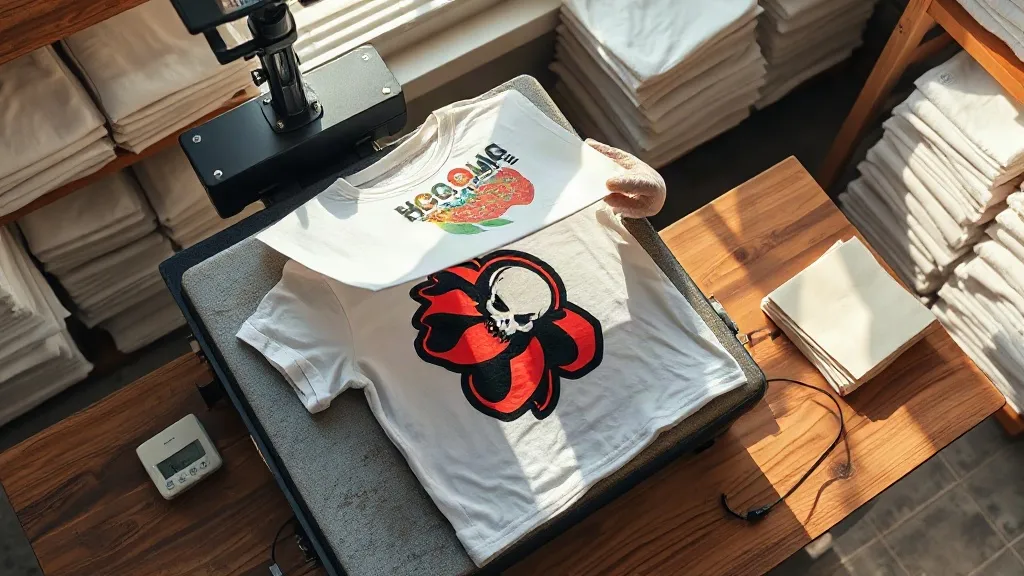
If you have spent any time in a print shop or a craft room over the past few years, you have probably noticed a shift. Heat presses that used to run vinyl all day are now loaded with sheets of printed film, and the people running them are talking about dtf transfers the way they once talked about screen setups. The appeal is easy to understand: full-color artwork, no weeding, no color separations, and a finished garment that feels soft enough to actually wear. But the gap between a transfer that looks great in a photo and one that survives twenty washes is wider than most buying guides admit. This piece walks through the parts that matter, from reading a film spec sheet to dialing in your press.
What a DTF Transfer Actually Is
Direct-to-film printing starts with a digital printer that lays down water-based pigment ink onto a coated PET film. A powder adhesive is applied while the ink is still wet, then the sheet is cured. What you end up holding is a flexible, pre-printed image with a thermoplastic glue layer on the back. When you press it onto fabric, the adhesive melts into the fibers and the ink sits on top as a thin, stretchy skin.
That structure explains most of the method's strengths and its quirks. Because the ink is printed flat and transferred as a unit, gradients, photographic images, and fine detail survive far better than they do in cut vinyl. Because there is no screen or plate, short runs make economic sense. And because the adhesive bonds mechanically rather than chemically, the fabric you press onto matters enormously.
How It Differs From Vinyl and Screen Printing
Vinyl is a layered plastic film, which means it sits on the garment and can feel heavy on large designs. Screen printing pushes ink into the fabric, giving excellent durability but requiring setup costs per color. DTF lands somewhere between them: softer than vinyl on big graphics, cheaper than screens at low quantities, and capable of photographic reproduction without any of the trapping and registration headaches.
The trade-off is that DTF is a two-part system. You are relying on the film, the powder, the cure, and your press all behaving. Any weak link shows up later as cracking or poor wash fastness, which is why sourcing matters more here than in almost any other decoration method.
Reading a Transfer Before You Buy
Most buyers judge a transfer by how the sample looks on a white tee. That is the least informative test you can run. A better approach is to ask specific questions and, where possible, order a small mixed sample so you can see the film in person.
- Ink laydown: Thick, raised ink feels impressive at first but tends to crack at stretch points. A thinner, evenly cured layer flexes better.
- Powder coverage: Hold the sheet up to a light. Patchy adhesive means patchy bonding, especially on dark garments.
- Film thickness: Thinner PET releases more cleanly and leaves a softer hand, but it is also fussier to handle during production.
- Edge quality: Clean, tight edges around the artwork suggest a well-calibrated printer and a proper cure.
- Storage condition: Ask how the sheets are stored. Humidity and heat degrade the adhesive layer long before you ever press it.
If you are ordering online, look for a supplier that publishes press temperature ranges, peel instructions, and wash-test claims rather than just glossy mockups. When people search for dtf transfers near me, what they usually want is a supplier who can turn samples around quickly and answer a technical question without transferring them to a sales rep.
Pressing Settings That Actually Hold Up
Every supplier publishes a recommended window, and every press behaves a little differently. Treat the spec sheet as a starting point, not gospel, and build your own reference card for each fabric you run.
Temperature and Pressure
Most films press somewhere between 150 and 165 degrees Celsius. Too cool and the adhesive never fully flows; too hot and the film can scorch or the ink can blur. Medium pressure is usually right: firm enough that you can see the fabric texture through the film, not so firm that the design spreads.
Peel Timing
Cold peel is the safer default for detailed artwork, because the adhesive has fully set before you pull the carrier away. Warm peel speeds up production but demands consistency. Pick one method per job and stick to it, because mixing peel styles mid-run is a reliable way to produce a batch with inconsistent hand feel.
Second Press
A short second press under a cover sheet or parchment improves wash durability noticeably. It reflows the adhesive into the fiber and smooths the surface. Many shops skip this step to save time and then wonder why their transfers fail at the first wash.
Matching Transfers to Fabric
Cotton is the easy case. The fiber surface is absorbent and the adhesive grips well, so 100 percent cotton tees and canvas totes are where dtf transfers perform best and most predictably.
Blends are workable but need testing. Polyester content above roughly half changes how heat moves through the garment, and some synthetics can yellow under a hot platen. Nylon and treated performance fabrics are the hardest cases: their surfaces are engineered to repel moisture, which is not what you want from an adhesive. If a customer asks for a transfer on a waterproof shell or a coated jacket, run a test garment before committing to an order.
Where DTF Fits in a Real Business
The method shines in exactly the situations that make other processes awkward. One-off memorial shirts for a family. A twenty-piece run for a local team. Sample packs for a brand testing designs before committing to inventory. Print-on-demand sellers who need to ship within a day of an order landing.
It is less suited to very large volumes where screen printing wins on unit cost, or to jobs requiring a specific tactile finish that only embroidery or specialty inks deliver. Knowing where the method stops being the right answer is part of using it well.
A Workflow That Avoids Rework
- Print or order a test sheet for any new fabric.
- Press one garment, then wash and dry it before accepting a bulk order.
- Record temperature, pressure, time, and peel style on a card taped near the press.
- Store unopened film flat, cool, and dry, and rotate stock so older sheets get used first.
- Trim or mask artwork edges before pressing to avoid a visible border on light garments.
Shops that follow a routine like this rarely deal with the classic complaints: edges lifting after a wash, a stiff patch where the design sits, or color that looks duller on the shirt than it did on screen. None of those are mysteries. They are process problems with process fixes.
Frequently Asked Questions
Do DTF transfers work on dark and light shirts equally well?
They do, because the white ink layer is printed as part of the image rather than relying on the garment color. The main difference is that on light garments you should check edge coverage carefully, since any stray adhesive or ink outside the design shows up much more clearly against a white background.
How many washes should a quality transfer survive?
A well-pressed transfer on cotton should comfortably handle dozens of home launderings when washed inside out in cool water and dried on low. Results drop sharply if the garment is washed hot, dried on high heat, or exposed to bleach, so pass those care instructions along to your customers.
Can I press a DTF transfer with a home iron?
It is possible for small designs on flat areas, but consistency is poor. A home iron cannot hold even temperature or pressure across the whole image, which leads to partially bonded edges. If you plan to sell finished garments, a proper heat press is not optional equipment.
Why does my transfer look cracked right after pressing?
Cracking immediately after press usually points to under-curing, insufficient pressure, or pressing before the film reached full temperature. It can also mean the ink layer was too thick to begin with. Try a second press under a cover sheet and check that your platen is genuinely at temperature with an infrared thermometer rather than the dial reading.
Is it worth ordering samples before a big order?
Always. Film quality varies widely between suppliers, and a sample lets you test the exact fabric, press, and wash routine you will use in production. The cost of a small sample pack is trivial next to reprinting a bulk order that fails in the customer's hands.