
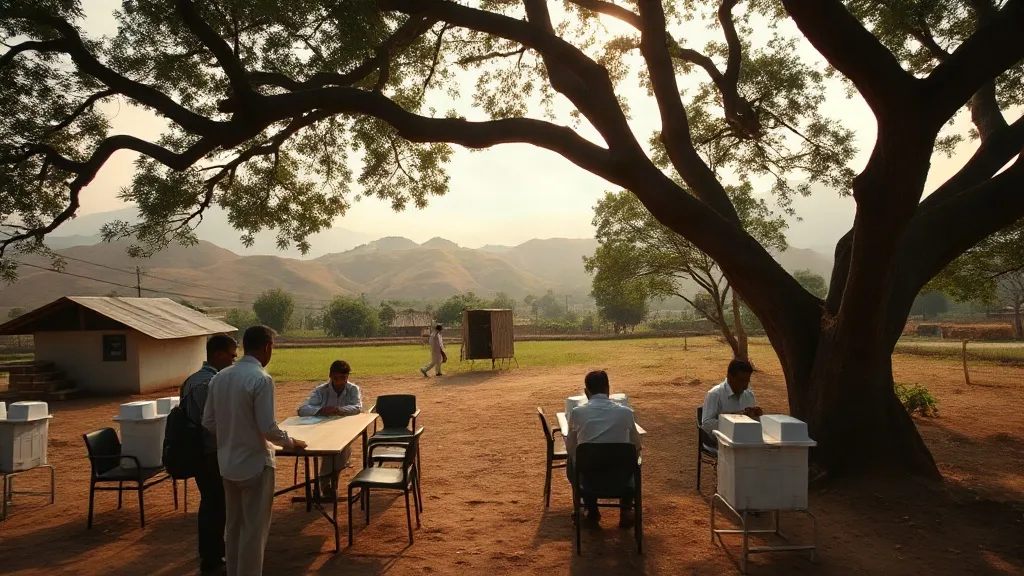
As the dust settles on recent electoral battles in Andhra Pradesh, attention now shifts to the grassroots. In Visakhapatnam and Alluri Sitarama Raju (ASR) districts, officials are deep in preparations for the upcoming local body polls, a crucial exercise that will shape governance at the village and ward levels for years to come. These elections, though often overshadowed by state and national politics, are the bedrock of India's democratic framework, determining who controls panchayats and municipalities. With the State Election Commission expected to announce the schedule soon, district administrations are leaving no stone unturned to ensure a smooth, fair, and inclusive process.
The Stakes Behind the Scenes
Local body elections in Andhra Pradesh are not just about electing representatives; they are a litmus test for the ruling party's popularity and the opposition's resilience. In Visakhapatnam, a bustling urban center with a mix of rural pockets, and ASR district, a largely tribal and rural region, the dynamics differ. Yet both share common challenges: ensuring security in remote areas, updating voter lists, and providing adequate infrastructure at polling booths. The review meetings held last week brought together district collectors, superintendents of police, and other officials to assess these factors. Visakhapatnam district collector emphasized the need for inter-departmental coordination, while the ASR district superintendent of police highlighted the importance of confidence-building measures in Maoist-affected pockets.
Security: A Top Priority
In ASR district, formerly part of Visakhapatnam, the shadow of left-wing extremism still looms large. Although incidents have decreased in recent years, the region remains sensitive. The police department has identified around 150 booths as hyper-sensitive and 300 as sensitive, based on past violence and accessibility. To counter any threat, additional central paramilitary forces are being requested. "We are mapping vulnerable areas and planning route marches and area domination exercises," said a senior police official. In Visakhapatnam, the focus is more on urban law and order, with attention to communally sensitive pockets and ensuring smooth traffic flow on polling day. The city police have already begun coordinating with residential welfare associations to spread awareness about security arrangements.
Infrastructure and Logistics
Conducting elections in ASR district is a logistical nightmare. Many villages are nestled in hilly terrains, accessible only by foot or motorbike. The administration is preparing to airlift EVMs and polling personnel to remote booths. In Visakhapatnam, the challenge is different: managing high voter turnout in urban booths without causing chaos. The district has over 3,000 polling stations, and officials are working on a queue management system to avoid long waits. Drinking water, shade, and ramps for differently-abled voters are being arranged. "We are also ensuring that all booths have electricity backup and first-aid kits," added the collector.
Voter Awareness and Inclusion
One of the key agendas in the review meetings was voter education. With the Election Commission's slogan "No Voter to be Left Behind," both districts are launching campaigns to encourage voter registration, especially among first-time voters and women. In ASR, tribal communities often feel alienated from the political process; hence, special outreach programs in local languages like Koya and Kuvi are being planned. Similarly, in Visakhapatnam, urban apathy is a concern. The administration is leveraging social media and community radio to boost turnout. "We want every eligible citizen to exercise their franchise without fear or inconvenience," said a senior official.
Political Climate and Expectations
The run-up to the local body polls has already seen political parties ramping up their campaigns. In Visakhapatnam, the ruling YSRCP and opposition TDP are locked in a bitter battle, with both claiming credit for development works. In ASR, the narrative is more about tribal welfare and land rights. The outcome of these elections will not only determine local leadership but also set the tone for the 2024 general elections. Analysts believe that a strong showing in rural areas could boost the morale of the winning party. However, the administration's focus remains on conducting a neutral and efficient election.
Challenges Ahead
Despite meticulous planning, challenges persist. The COVID-19 pandemic may have subsided, but health protocols still need to be followed. Ensuring social distancing at polling booths, especially in crowded urban areas, will be tricky. Additionally, the threat of fake news and misinformation on social media could disrupt the peace. The police have set up monitoring cells to keep an eye on provocative content. In ASR, the terrain and lack of communication networks pose hurdles for real-time reporting of incidents. The administration is training polling staff to handle EVM malfunctions and other technical glitches.
SSS
When will the local body elections be held in Visakhapatnam and ASR districts?
The State Election Commission is expected to announce the schedule soon. Officials indicate that the polls may be held in phases, starting after the monsoon season. An official notification will be released at least three weeks before the polling date.
What are the security arrangements for the polls in Maoist-affected areas?
In ASR district, additional paramilitary forces will be deployed in hyper-sensitive booths. The police will conduct route marches and area domination exercises. In Visakhapatnam, focus is on urban law and order, with CCTV surveillance at key booths.
How can voters check if their names are on the electoral roll?
Voters can visit the Chief Electoral Officer's website or use the Voter Helpline app to verify their details. They can also contact their local municipal or panchayat office for assistance.
What measures are being taken to ensure COVID-19 safety at polling booths?
Although restrictions have eased, polling booths will have sanitizers, masks for staff, and arrangements for social distancing. Voters are encouraged to bring their own masks and follow guidelines.
Will there be ramps and other facilities for differently-abled voters?
Yes, all polling stations will have ramps, wheelchairs, and volunteers to assist differently-abled and elderly voters. The administration is committed to making the process inclusive.