
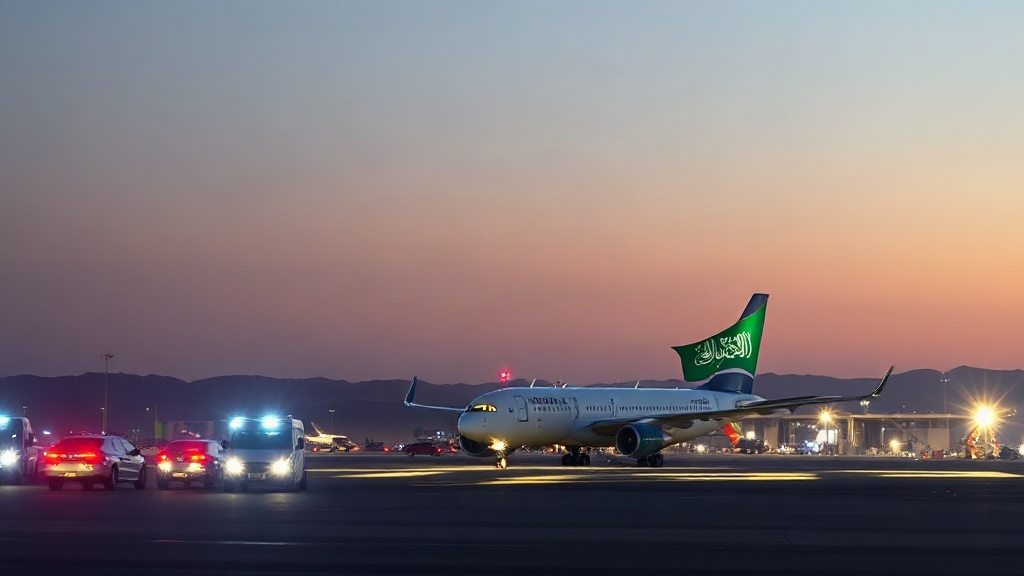
On a routine evening flight from Dubai to Tel Aviv, passengers and crew aboard a FlyDubai aircraft experienced an unexpected turn of events. The plane, en route to Israel, was forced to divert to Saudi Arabia's Tabuk airport following an emergency alert. The airline has confirmed that the flight encountered an "incident" and that the aircraft landed safely. While details remain scarce, the event has sparked questions about aviation safety, regional airspace, and the growing but still delicate ties between Gulf states and Israel.
What Happened on the Flight?
The FlyDubai flight departed Dubai International Airport bound for Tel Aviv's Ben Gurion Airport. According to the airline, an emergency alert was triggered during the journey. In response, the crew made the decision to divert to Tabuk, a city in northwestern Saudi Arabia, where the plane touched down without further incident. The airline has not disclosed the nature of the emergency, citing an ongoing review. Passengers were reportedly disembarked and assisted by local authorities.
This is not the first time a commercial flight has had to divert due to an in-flight emergency. Diversions are a standard safety protocol when pilots need to address a technical issue, medical emergency, or security concern. The choice of Tabuk, however, is notable given the geopolitical context. Saudi Arabia and Israel do not have formal diplomatic relations, though recent years have seen a thaw in ties, including permission for Israeli carriers to use Saudi airspace. This diversion underscores how practical cooperation can transcend political divides, especially in matters of safety.
Why Saudi Arabia? The Significance of Tabuk
Tabuk is a city in northwestern Saudi Arabia, close to the Jordanian border and the Red Sea. Its airport is a regional hub with the infrastructure to handle international flights. When an aircraft faces an emergency, pilots typically divert to the nearest suitable airport that can accommodate the plane and provide necessary assistance. Tabuk's proximity to the flight path made it a logical choice.
But the diversion also highlights a quiet but important shift in Middle Eastern aviation. For decades, Saudi airspace was closed to Israeli-bound flights, forcing longer routes. In 2022, Saudi Arabia opened its airspace to all carriers, including those flying to and from Israel. This move was seen as a step toward normalization and improved regional connectivity. While the diversion was not a political statement, it demonstrates the practical benefits of that decision: in an emergency, the nearest airport can be used without bureaucratic hurdles.
The Emergency Alert: What Could It Be?
FlyDubai has described the event as an "incident" but has not elaborated. Emergency alerts can be triggered by a variety of issues: a technical malfunction, a medical emergency onboard, or a security concern such as an unruly passenger. In commercial aviation, pilots are trained to declare an emergency when they need priority handling from air traffic control. This can range from a minor issue to a serious threat.
Without official details, speculation is unhelpful. What matters is that the crew followed standard procedures, and the plane landed safely. The airline's response, including its communication with passengers and authorities, will be scrutinized in the coming days. Safety is the paramount concern, and the fact that the diversion occurred without further incident is a testament to the crew's training and the robustness of aviation protocols.
Regional Implications: A Small but Telling Moment
This diversion is a reminder that aviation is deeply intertwined with geopolitics. The fact that an Israeli-bound flight could land in Saudi Arabia without friction is a sign of how far relations have come. It also raises questions about what happens next: will passengers be allowed to continue their journey? Will there be any diplomatic fallout? So far, there has been no indication of political tension. Saudi authorities have cooperated, and the airline has expressed gratitude for their assistance.
For travelers, the incident may cause some anxiety, but it also highlights the safety net that exists across borders. In an emergency, airlines and authorities prioritize human life over politics. That is a reassuring thought in a region often defined by conflict.
What This Means for FlyDubai and Passengers
FlyDubai, a low-cost carrier based in Dubai, operates a young fleet of Boeing 737 aircraft. The airline has a good safety record, and this incident, while unfortunate, is unlikely to dent its reputation significantly. The airline will likely conduct an internal review and cooperate with investigators. Passengers on the flight will be rebooked or provided alternative arrangements. The airline has a duty of care to look after them, including accommodation and onward travel.
For passengers, the experience can be unsettling, but it is important to remember that diversions are rare and usually handled professionally. Communication from the airline is key. FlyDubai has said it is in contact with passengers and will provide updates. Those affected should reach out to the airline directly for assistance.
Frequently Asked Questions
Why did the FlyDubai flight divert to Saudi Arabia instead of continuing to Israel?
The decision to divert is made by the pilot in command based on the nature of the emergency and the nearest suitable airport. Tabuk was likely the closest airport that could safely accommodate the aircraft and provide necessary services. Continuing to Tel Aviv might have posed additional risks if the emergency required immediate attention.
Is it safe to fly over Saudi Arabia?
Yes, Saudi Arabian airspace is considered safe for commercial aviation. The country has modern air traffic control and airports that meet international standards. Many airlines, including those from Israel, use Saudi airspace regularly. The diversion itself is a sign that safety protocols work.
What happens to passengers after an emergency diversion?
After landing, passengers are typically disembarked and taken to a terminal where they can wait. The airline arranges for food, accommodation if needed, and onward travel. In some cases, a replacement aircraft is sent. Passengers should follow instructions from airline staff and local authorities.
Will this affect future flights between Dubai and Tel Aviv?
It is too early to say. This appears to be an isolated incident, and there is no indication that it will lead to route changes or increased tensions. Airlines continuously assess safety and may adjust procedures if necessary, but the route is well-established and popular.