
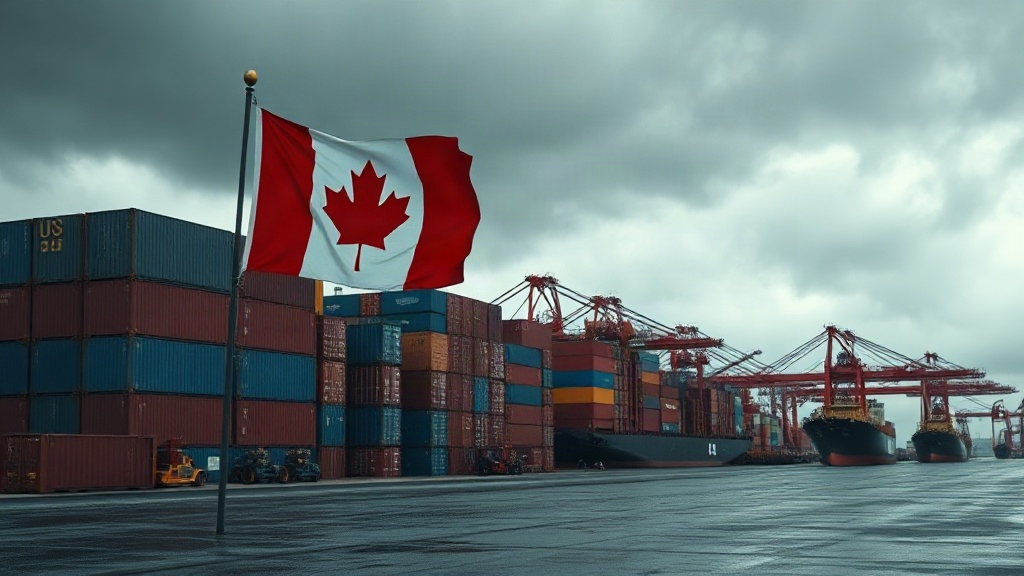
The clock is ticking on a new phase of the U.S.-Canada trade conflict. As of Tuesday, Canada’s retaliatory tariffs on a wide range of American goods are set to take effect, with rates climbing as high as 50 percent. The move is a direct response to Washington’s own tariff measures, and it comes with a stark warning from President Trump: more American tariffs could be on the way. For businesses, workers, and consumers on both sides of the border, the fallout is already beginning to feel real.
At the heart of this escalation is a tit-for-tat dynamic that has defined the relationship between the two neighbors for months. Canada’s approach is not a blanket tariff but a carefully targeted list designed to hit politically sensitive U.S. products. The goal, Canadian officials say, is to pressure American lawmakers and industries to push back against the White House’s trade agenda. But the strategy carries risks, and the economic consequences are far from one-sided.
What Canada’s New Tariffs Cover
Canada’s retaliatory package is broad, touching everything from agricultural goods to manufactured products. The list includes items like orange juice, ketchup, lawn mowers, and playing cards, but it also extends to more substantial sectors such as steel and aluminum. The tariff rates vary, with some products facing an additional 25 percent and others hitting the maximum of 50 percent. The intent is clear: make American exporters feel the pain in sectors that are politically influential.
For Canadian consumers, the immediate effect will be higher prices on imported American goods. Retailers have been stocking up in anticipation, but those inventories won’t last forever. Small businesses that rely on U.S. suppliers are particularly vulnerable, as they often lack the leverage to absorb the extra costs or switch suppliers quickly. The Canadian government has promised support programs, but details remain vague, leaving many entrepreneurs frustrated.
Why Canada Chose This Approach
The Canadian strategy is rooted in a simple principle: reciprocity. When the U.S. imposed tariffs on Canadian steel and aluminum, Canada responded with its own duties on American products. This time, the escalation is more aggressive because the stakes are higher. Canadian officials believe that a firm response is necessary to deter further American protectionism. They also hope to create a coalition of domestic and international pressure that could force a negotiated settlement.
However, critics argue that the approach is a double-edged sword. While it punishes American exporters, it also raises costs for Canadian businesses and consumers. Some economists warn that the tariffs could slow economic growth on both sides of the border, particularly in industries that are deeply integrated across the supply chain. The auto sector, for example, relies on parts crossing the border multiple times before a vehicle is finished. Tariffs disrupt that flow and add costs at every step.
Trump’s Escalation Threat
President Trump has made no secret of his willingness to escalate. In recent statements, he has threatened to impose a new round of tariffs on Canadian goods, potentially targeting the automotive industry, which would be a devastating blow. The auto sector is one of the largest employers in both countries, and a tariff on cars or parts would send shockwaves through the entire North American economy. Trump’s rhetoric suggests he sees tariffs not just as a negotiating tool but as a permanent feature of his trade policy.
The timing of Trump’s threats is significant. With midterm elections approaching, the President is under pressure to deliver on his promises to protect American jobs and reduce the trade deficit. Canada is an easy target because of the close economic ties and the perception that the relationship is lopsided in Canada’s favor. But the reality is more complex. The U.S. actually runs a trade surplus with Canada in goods and services when energy is excluded, a fact often lost in the political debate.
The Broader Impact on North American Trade
Beyond the immediate tariff battle, the dispute is eroding the foundation of the North American free trade framework. The renegotiation of NAFTA, now the USMCA, was supposed to bring stability. Instead, the constant threat of tariffs has created an atmosphere of uncertainty that discourages investment. Companies are hesitant to build new factories or expand operations when the rules of trade can change overnight.
For workers, the uncertainty is equally damaging. Factories that rely on cross-border supply chains may delay hiring or even lay off employees if tariffs make their products uncompetitive. The agricultural sector is already feeling the pinch, with Canadian farmers facing retaliation for U.S. tariffs on dairy and other products. The situation is a reminder that trade wars have real human costs, even when they are fought with abstract policy tools.
How Businesses Are Responding
In the face of this uncertainty, many businesses are taking proactive steps. Some are stockpiling goods before the tariffs hit, while others are exploring alternative suppliers in Europe or Asia. Larger corporations have the resources to navigate the new landscape, but small and medium-sized enterprises are struggling. They lack the legal expertise to understand the complex tariff schedules and the financial cushion to absorb the added costs.
Industry associations on both sides of the border are lobbying hard for a de-escalation. The U.S. Chamber of Commerce and the Canadian Chamber of Commerce have issued joint statements warning of the economic damage. They argue that the tariffs are a tax on consumers and a drag on growth, and they are pushing for a return to the negotiating table. But with political rhetoric running hot, a quick resolution seems unlikely.
What Consumers Can Expect
For ordinary consumers, the impact will be felt in everyday purchases. Prices on imported American goods are likely to rise, and some products may disappear from shelves entirely if importers decide the tariffs make them unprofitable. Grocery items, household goods, and even some electronics could see price increases. The timing is particularly unfortunate, as inflation has already been a concern in both countries.
There are ways to mitigate the impact. Buying Canadian-made products where possible is one option, but not always feasible. Consumers can also look for sales and promotions as retailers try to clear out inventory before the tariffs take full effect. In the long run, the best hope is that the dispute is resolved quickly, but that outcome is far from certain.
The Political Calculus
Both leaders are playing to their domestic audiences. For Trump, the tariffs are a way to show strength and fulfill campaign promises. For Canadian Prime Minister Justin Trudeau, the response is about standing up to a bully and protecting Canadian interests. The political optics are powerful, but they come at a cost. The longer the dispute drags on, the more damage it does to the economies and the relationship between the two countries.
History offers some lessons. The U.S.-Canada trade relationship has weathered many storms, from softwood lumber disputes to the original NAFTA negotiations. In most cases, cooler heads eventually prevailed. But the current climate is different. The level of mistrust is high, and the use of tariffs as a weapon has become normalized. That makes a peaceful resolution harder to achieve.
What Happens Next
The immediate focus is on Tuesday, when Canada’s tariffs take effect. The reaction from Washington will be telling. If Trump follows through on his threat to escalate, the situation could spiral quickly. Negotiations are ongoing behind the scenes, but neither side appears willing to back down publicly. The next few weeks will be critical in determining whether this is a short-term skirmish or the beginning of a prolonged trade war.
For now, businesses and consumers are left to prepare for the worst while hoping for the best. The North American economy is deeply interconnected, and the costs of this dispute will be felt on both sides of the border. The question is whether the political leaders are willing to pay that price.
Frequently Asked Questions
What Canadian tariffs are taking effect on Tuesday?
Canada is imposing new tariffs on a range of U.S. goods, with rates up to 50 percent. The list includes agricultural products, steel, aluminum, and various consumer goods. The tariffs are a direct response to U.S. tariffs on Canadian products.
Why is Canada imposing retaliatory tariffs on the U.S.?
Canada is responding to U.S. tariffs on Canadian steel, aluminum, and other goods. The goal is to pressure American industries and lawmakers to push back against the Trump administration’s trade policies and to protect Canadian economic interests.
How will these tariffs affect Canadian consumers?
Canadian consumers will likely see higher prices on imported American goods, including food items, household products, and possibly some electronics. Some products may become less available if importers reduce shipments due to the added costs.
What is Trump threatening to do next?
President Trump has threatened to impose additional tariffs on Canadian goods, potentially targeting the automotive sector. Such a move would have severe economic consequences for both countries, given the highly integrated nature of the auto industry.
How long will this trade dispute last?
It is difficult to predict. Negotiations are ongoing, but the political climate is tense. The dispute could be resolved in weeks if both sides agree to talks, or it could escalate into a prolonged trade war with lasting economic damage.