
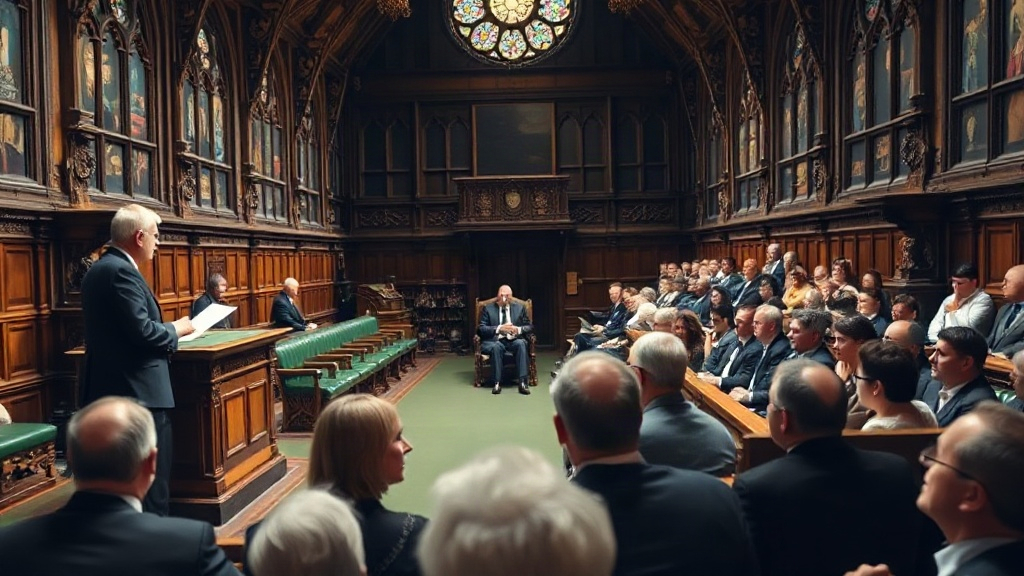
It was never going to be an easy debut. Standing at the despatch box for his first Prime Minister's Questions, the new premier knew that the economy would dominate. And it did, from the very first question. Borrowing costs have climbed sharply in recent days, and the opposition leader wasted no time in turning up the heat. The exchange set the tone for what promises to be a bruising parliamentary session, with fiscal policy firmly in the crosshairs.
The backdrop: why borrowing costs are surging
To understand the pressure the Prime Minister faced, you need to look at what has been happening in the bond markets. Government borrowing costs, measured by the yield on gilts, have risen to levels not seen in years. This is not an abstract financial metric; it has real consequences. Higher yields mean the government pays more to service its debt, which can squeeze public spending and push up borrowing costs for businesses and homeowners too. The surge has been driven by a mix of global factors and domestic concerns about the sustainability of the public finances. Investors are demanding a higher premium to lend to the UK, and that is a problem for any government, but especially one that has promised to invest heavily in public services.
The Prime Minister's team had hoped to focus on other issues in the early weeks, but the markets have forced the economy to the top of the agenda. In the run-up to PMQs, Treasury officials were reportedly working around the clock to reassure investors, but the numbers kept moving in the wrong direction. By the time the session began, the atmosphere in the chamber was tense, with both sides knowing that the economy would be the main battleground.
The exchange: a direct challenge on fiscal responsibility
The opposition leader did not hold back. Her first question was pointed: would the Prime Minister confirm that his government would be grounded in fiscal responsibility, or would he allow borrowing to spiral out of control? The phrasing was deliberate. It echoed the language the Prime Minister himself had used during the election campaign, and it put him in a difficult position. If he agreed, he would be endorsing a set of constraints that might limit his spending plans. If he disagreed, he would look reckless.
The Prime Minister's response was measured but firm. He repeated his commitment to fiscal discipline, but he also defended the need for targeted investment to get the economy growing. He argued that the surge in borrowing costs was a global phenomenon, not a reflection of his government's policies. But the opposition leader was ready for that argument. She pointed to specific decisions, such as the recent budget measures, and asked whether they had made the situation worse. The Prime Minister sidestepped the question, instead accusing the opposition of talking down the economy. It was a classic PMQs exchange: more heat than light, but with genuine stakes underneath.
Why this matters beyond Westminster
It would be easy to dismiss PMQs as political theatre, but the issues raised have direct consequences for people's lives. When government borrowing costs rise, the effects ripple through the economy. Mortgage rates, which are partly influenced by the same market forces, can go up. Businesses face higher costs for loans, which can dampen investment and hiring. And if the government has to spend more on debt interest, there is less money for schools, hospitals, and infrastructure. These are not abstract concerns; they are felt in household budgets and on high streets.
The Prime Minister knows this. His challenge is to convince the public and the markets that he has a credible plan to bring borrowing under control without choking off growth. That is a difficult balancing act, and it is made harder by the fact that the opposition is ready to exploit any sign of weakness. The coming weeks will be crucial. If borrowing costs continue to rise, the pressure will only intensify, and the government may have to make difficult choices about spending and taxation.
The political calculation
For the opposition leader, the strategy is clear: paint the Prime Minister as out of his depth on the economy. She wants to revive memories of past fiscal crises and suggest that the new government is repeating the same mistakes. Her questions were designed to trap the Prime Minister into either admitting fault or looking evasive. In the short term, it is a smart tactic. The public is worried about the cost of living, and any sense that the government is not in control of the economy could be damaging.
But there are risks for the opposition too. If they are seen as talking down the economy for political gain, it could backfire. Voters may punish those who seem to be rooting for failure. And the Prime Minister has a track record of turning attacks back on his opponents. In the coming weeks, both sides will be testing their messages, and the economy will be the central battleground. The next set of economic data, including inflation and growth figures, will be scrutinised more closely than ever.
What happens next?
The immediate focus will be on the bond markets. If yields stabilise or fall, the pressure on the Prime Minister may ease. But if they continue to rise, the government will face increasingly difficult questions. The Treasury is likely to consider a range of options, from accelerating deficit reduction to reassuring investors with clearer fiscal rules. The Prime Minister will also face pressure from his own backbenchers, some of whom are already nervous about the economic outlook.
For the public, the key thing to watch is how these developments affect everyday costs. Mortgage rates, loan rates, and even the price of goods can be influenced by government borrowing costs. The Prime Minister has promised to protect living standards, but that promise will be tested if the economic headwinds get stronger. The next PMQs will be just as important, and the opposition will be ready to press the advantage.
Frequently Asked Questions
What are borrowing costs and why are they rising?
Borrowing costs refer to the interest rate the government pays on its debt, often measured by the yield on government bonds. They are rising because investors are demanding a higher return to lend to the UK, driven by factors such as inflation expectations, global interest rate trends, and concerns about the sustainability of the public finances.
How do higher borrowing costs affect ordinary people?
Higher borrowing costs can lead to higher mortgage rates, more expensive loans for businesses, and potentially reduced public spending on services. This can squeeze household budgets and slow economic growth, affecting jobs and wages.
What did the Prime Minister say about fiscal responsibility at PMQs?
The Prime Minister said his government would be grounded in fiscal responsibility, but he also defended the need for targeted investment. He argued that the surge in borrowing costs was a global issue, not a result of his policies.
Why is the opposition focusing on the economy?
The opposition sees the economy as the government's biggest vulnerability. By highlighting rising borrowing costs and questioning the Prime Minister's fiscal credibility, they hope to win public support and put pressure on the government to change course.