
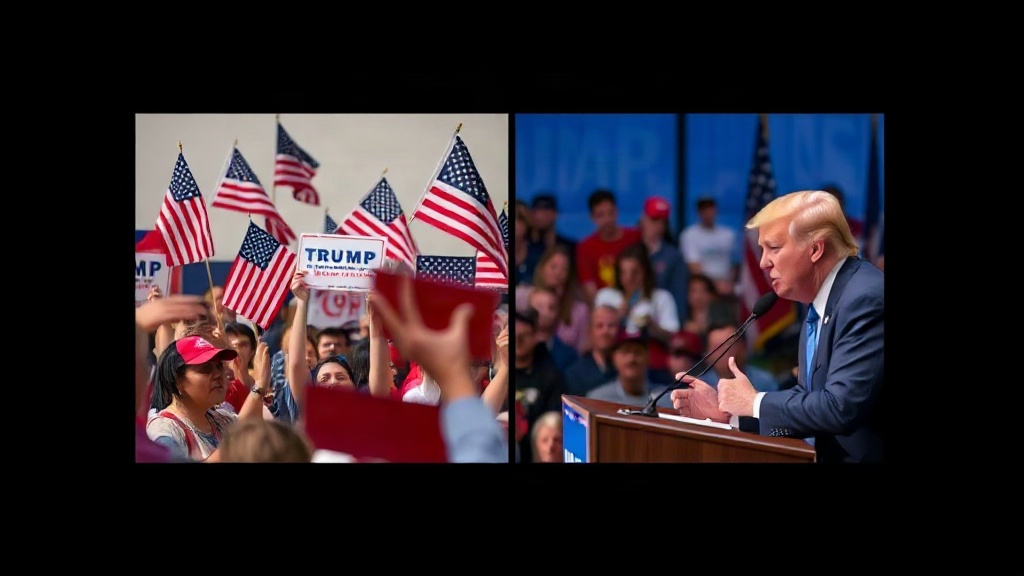
In the high-stakes arena of American politics, a quiet but significant shift is underway. Republican candidates in several red and battleground states are increasingly choosing to distance themselves from former President Donald Trump, a figure who has dominated the party's identity for nearly a decade. This isn't a full-scale revolt, but a series of calculated moves that suggest a growing recognition that a blanket embrace of Trump isn't a one-size-fits-all path to victory.
Take, for example, the competitive Senate race in Pennsylvania. There, the Republican nominee has subtly adjusted his messaging, emphasizing local economic concerns and steering clear of national controversies that could alienate moderate suburban voters. Similarly, in Georgia, a state that flipped blue in 2020, some down-ballot Republicans are focusing on kitchen-table issues rather than relitigating the last election. These are not isolated incidents; they reflect a broader strategic recalibration within the party as the midterm elections approach.
The Calculus of Distancing
Why would candidates in traditionally red states risk the wrath of Trump's loyal base? The answer lies in the math of modern elections. While Trump's endorsement remains a powerful tool in deep-red primaries, it can become a liability in general elections where independents and moderate Republicans hold sway. In states like North Carolina, Arizona, and Wisconsin, the electorate is not monolithic; a candidate who ties themselves too closely to Trump may struggle to win over the voters who decide close races.
Moreover, Trump's legal troubles and ongoing false claims about the 2020 election have become a distraction that many candidates would rather avoid. By keeping the focus on local issues—inflation, crime, education—these Republicans hope to appeal to a wider audience without triggering the intense negative partisanship that Trump often evokes. It's a delicate balancing act: they need Trump's base to turn out, but they also need to avoid scaring off the middle.
Case Studies: Where the Break Is Most Visible
In Arizona, the Republican gubernatorial candidate has walked a fine line, accepting Trump's endorsement but rarely mentioning him on the campaign trail. Instead, she talks about border security and water policy, issues that resonate with Arizonans regardless of their feelings about Trump. In Ohio, the Senate hopeful has focused on his business background and away from Trump's election grievances, even as he welcomes the former president's support.
These candidates are not renouncing Trump; they are strategically distancing themselves. They recognize that while Trump remains popular within the party, his coattails are not as long as they once were. In fact, in some suburban districts, being too close to Trump can be a death knell. The 2020 election showed that Trump lost ground in suburbs across the country, and those trends have continued in special elections since.
What This Means for the Midterms
The midterm elections will be a crucial test of this strategy. If these distancing Republicans win, it could embolden others to follow suit, further loosening Trump's grip on the party. If they lose, Trump and his allies will likely blame the defeats on disloyalty, arguing that only full-throated Trumpism can win. Either way, the results will shape the GOP's direction heading into 2024.
It's also worth noting that this phenomenon is not entirely new. In 2018, some Republicans in swing districts tried to distance themselves from Trump and largely failed. But the current environment is different: Trump is no longer in office, and his influence, while still significant, is being tested in new ways. The candidates breaking from him now are doing so with the benefit of hindsight, learning from past mistakes.
The Base's Reaction
So far, Trump has not aggressively attacked these candidates, perhaps because he understands the political realities they face. His endorsements are still highly sought after, and he remains the party's most potent fundraiser. However, if the distancing becomes more pronounced, he may feel compelled to respond. His base, too, is watching. Many Trump supporters are fiercely loyal and may view any deviation as betrayal. Candidates must therefore navigate this carefully, often using coded language or focusing on issues rather than personalities.
For instance, instead of criticizing Trump directly, they might say, "I'm focused on the future, not the past," or "I'm my own person." These phrases signal independence without provoking a backlash. It's a nuanced dance that requires political savvy.
Implications for the Republican Party
The long-term implications are profound. If the party can successfully pivot away from Trump's personality-driven politics, it might broaden its appeal and secure a more stable coalition. But if it fails, it risks remaining a cult of personality that struggles in national elections. The midterms will provide valuable data on which approach works best.
Furthermore, this internal tension is not just about Trump; it's about the soul of the Republican Party. Is it the party of tax cuts and small government, or is it the party of cultural grievances and election conspiracies? The candidates distancing themselves from Trump are often trying to return to the former, hoping to recapture the Reagan-era coalition. Whether that's possible in today's polarized climate is an open question.
Frequently Asked Questions
Why are some Republicans distancing themselves from Trump now?
They are calculating that in general elections, especially in battleground states, a close association with Trump can alienate moderate and independent voters. By focusing on local issues, they hope to build a broader coalition.
Is this a permanent break from Trump?
Not necessarily. Most of these candidates still accept Trump's endorsement and avoid direct criticism. It's a strategic distancing, not a full repudiation. They are trying to have it both ways: keep the base energized while appealing to the middle.
How is Trump responding to these moves?
So far, Trump has largely refrained from attacking these candidates, likely recognizing the political necessity of their strategies. However, he has a history of lashing out at perceived disloyalty, so the situation remains fluid.
What does this mean for the 2024 presidential election?
If the distancing strategy proves successful in the midterms, it could encourage more Republicans to assert independence from Trump, potentially leading to a more crowded and competitive 2024 primary. If it fails, Trump's grip on the party may tighten.
Are there any risks for candidates who distance themselves?
Yes, they risk alienating Trump's loyal base, which could depress turnout in the primary or general election. They must carefully balance their messaging to avoid provoking a backlash from Trump supporters.