
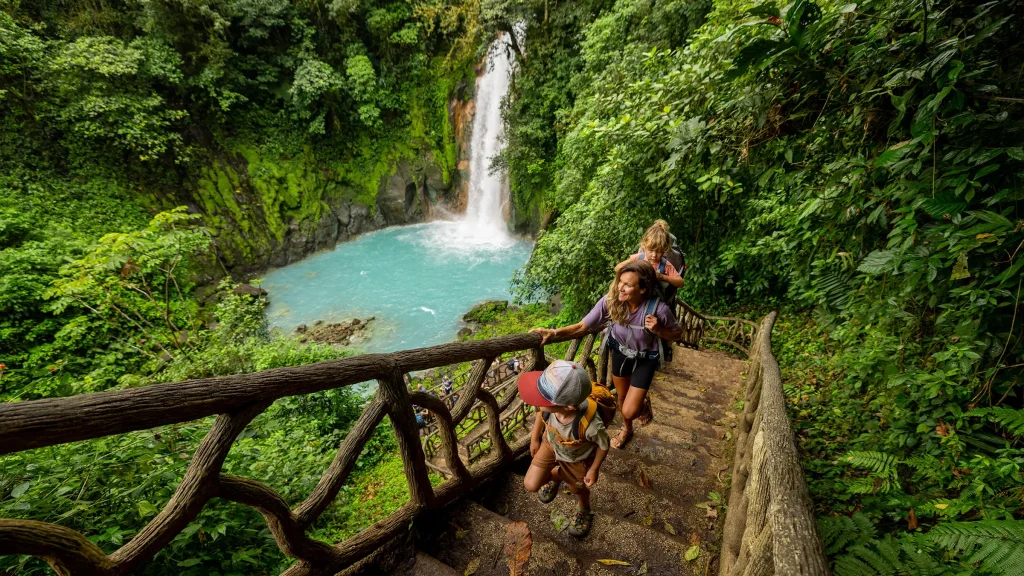
Securing its legacy as a global conservation leader, Costa Rica has officially claimed the crown of the top eco-tourism destination for the summer 2026 travel season. Announced by major international travel bodies alongside the launch of the “Empieza a vivir, Pura Vida” campaign, the Central American nation continues to outperform global competitors by prioritizing eco-conscious infrastructure over mass-market volume. With nearly 30% of its land protected under national reserves and an electric grid powered entirely by renewable energy, Costa Rica offers high-value travelers a masterclass in how to combine thrilling outdoor adventures with meaningful environmental preservation.
Table of Contents
- 1. The Path to Victory: Why Costa Rica Remains the Top Eco-Tourism Destination
- 2. Reinventing Nature: The Shift from Mass Tourism to Premium Green Travel
- 3. Ecotourism Performance Metrics in Central America
- 4. What the Experts Say: Addressing the Hidden Costs of the Green Boom
- 5. Frequently Asked Questions
The Path to Victory: Why Costa Rica Remains the Top Eco-Tourism Destination
Costa Rica’s dominance in environmental stewardship is not a recent development, but rather the result of decades of consistent conservation policy. In early 2026, the country was awarded the “Best Nature Destination” title at the prestigious Forbes Travel Awards 2026, solidifying the nation’s reputation as the undisputed top eco-tourism destination of the decade.
By actively regenerating degraded rainforests and doubling its forest cover from 21% to 54% over forty years, the country has set a global standard for reforestation. The national model proves that environmental preservation can serve as a robust economic driver, generating over $14 billion in natural capital value annually.
Reinventing Nature: The Shift from Mass Tourism to Premium Green Travel
To maintain its status as the top eco-tourism destination, the Costa Rican Tourism Board (ICT) has transitioned away from volume-driven mass tourism. The strategic focus has shifted to higher-spending, long-haul travelers who are more likely to embark on fuller, regional itineraries spanning multiple national parks.
Instead of low-cost, short-term resort packages, travelers are encouraged to stay longer and choose certified eco-lodges. To support this, ICT developed the Certificate of Sustainable Tourism (CST) standard, dividing businesses into Basic and Elite levels based on their direct, measurable impacts on local ecosystems.
Ecotourism Performance Metrics in Central America
Evaluating the country’s environmental footprint and traveler spending reveals why international organizations consistently rank Costa Rica as the top eco-tourism destination compared to regional competitors. The nation successfully translates conservation into tangible GDP benefits.
| Tourism Performance Variable | Regional Competitors (Average) | Costa Rica (2026 Status) |
|---|---|---|
| Protected Terrestrial Territory Share | 10% – 15% of national land | Over 28% (National Parks & Reserves) |
| Defining Features of the Top Eco-Tourism Destination | Traditional resort-centric infrastructure | Regenerative, non-massive travel model |
| Nationwide Clean Energy Generation | 45% – 65% fossil fuel dependence | Nearly 100% (Hydro, Geothermal, Wind, Solar) |
| Global Biodiversity Concentration | Moderate distribution per sq. kilometer | Holds 6% of Earth’s recorded species |
What the Experts Say: Addressing the Hidden Costs of the Green Boom
Even as the country cements its title as the top eco-tourism destination, local economists warn of the hidden costs of planetary gentrification along pristine coastal areas. The sudden influx of high-earning foreign digital nomads has driven property values up, displacing some local families.
“Costa Rica is perceived as a society that honors nature in its territory. It is essential that our tourism model continues to prioritize local human well-being, ensuring that the economic gains of conservation are fairly distributed back to our coastal and rural communities.”
To combat this, initiatives like Fonafifo’s carbon footprint program allow visitors to offset their travel emissions, channeling funds directly into agroforestry and Payment for Environmental Services (PSA) programs. This directly supports local landowners, making sustainability a shared responsibility.
Frequently Asked Questions
What makes Costa Rica the top eco-tourism destination for Summer 2026?
Costa Rica protects over 28% of its territory in national parks, harbors 6% of global biodiversity, generates nearly 100% of its electricity from renewable sources, and relies on a premium, non-massive sustainable travel model.
How can travelers offset their carbon footprint when visiting?
Through the national Fonafifo program, travelers can calculate the carbon footprint of their flights and local transit and donate equivalent funds directly into reforestation and hydrographic protection schemes.
What does the CST certification mean for Costa Rican hotels?
The Certificate for Sustainable Tourism (CST) is a rigorous standard evaluated by the Costa Rican Tourism Board (ICT) that categorizes hotels and tour operators into Basic or Elite levels based on their environmental and social sustainability.