
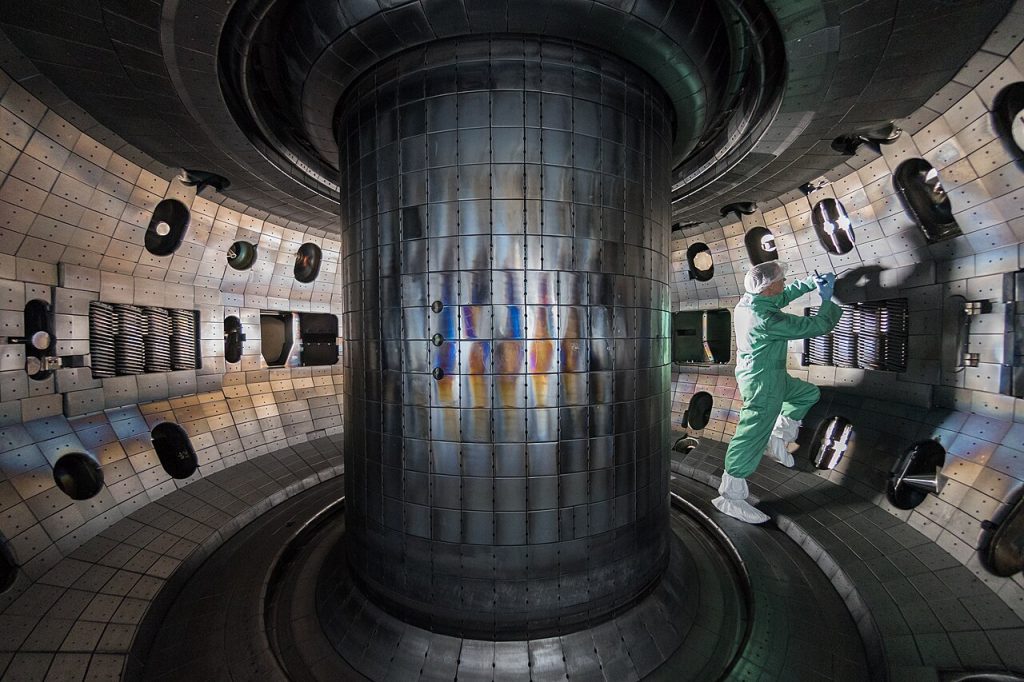
The global fusion energy race has entered a historic phase after an experimental tokamak reactor sustains plasma stability at extreme temperatures for over 22 minutes, smashing previous global benchmarks. Operating at the French Atomic Energy Commission’s (CEA) Cadarache site, the WEST tokamak successfully maintained superheated hydrogen plasma for 1,337 seconds. This milestone, achieved in late-stage test campaigns, outstripped the previous 17-minute record set by China’s EAST “artificial sun” reactor, bringing humanity closer to a virtually limitless source of carbon-free energy.
Table of Contents
A New Era for Clean Energy: How the Tokamak Reactor Sustains Plasma Stability
Nuclear fusion is often regarded as the “holy grail” of clean energy, offering a safe, carbon-free power source with abundant hydrogen isotopes as fuel. Unlike commercial nuclear fission, which splits atoms apart, fusion generates energy by forcing hydrogen nuclei to merge at stellar temperatures.
This massive success, where a tokamak reactor sustains plasma conditions ten times hotter than the core of the Sun, marks a massive leap toward commercial nuclear fusion. Holding superheated plasma stable within a room-sized magnetic field has historically been physics’ most difficult hurdle, as turbulent forces can easily degrade the reaction in fractions of a second.
Tungsten Divertors and Advanced RF Heating: The Tech Behind the Run
The physical design details show how the French tokamak reactor sustains plasma currents by utilizing highly heat-resistant tungsten-based components. Unlike older reactors lined with carbon-based tiles, the WEST tokamak’s tungsten environment can withstand extreme heat and neutron exposure without absorbing precious fuel.
To prevent localized plasma collapses, engineers injected 2 megawatts of lower hybrid radiofrequency waves to accelerate electrons and establish a highly uniform, steady current. Furthermore, an actively cooled divertor system successfully extracted 2.6 gigajoules of excess energy during the historic 22-minute run, preserving the physical integrity of the reactor’s inner chamber.
Comparing Global Tokamak Performance Records
Analyzing the performance of these devices helps explain how a modern tokamak reactor sustains plasma configurations far more efficiently than older copper-lined facilities. The latest global milestones demonstrate rapid progress toward the thousand-second operational threshold.
| Experimental Facility | Sustained Plasma Duration | Key Technical Feature |
|---|---|---|
| China’s EAST “Artificial Sun” | 1,066 Seconds (Over 17 Minutes) | Superconducting Magnets (Hefei) |
| France’s WEST Tokamak | 1,337 Seconds (Over 22 Minutes) | Tungsten-Lined Wall & LH Radiofrequency |
| How the Tokamak Reactor Sustains Plasma | Progressing to Multi-Hour Cycles | Active Divertor Heat Extraction |
| ITER (Target Operational Phase) | Planned Continuous Burn Cycles | Gigawatt-Scale Confinement (South France) |
What the Experts Say: Paving the Way for ITER
While researchers previously struggled with magnetic confinement drift, a tokamak reactor sustains plasma far more easily today using real-time machine learning adjustments. These technical lessons are being funneled directly into the massive International Thermonuclear Experimental Reactor (ITER).
“WEST has achieved a new key technological milestone by maintaining hydrogen plasma for more than twenty minutes through the injection of 2 MW of heating power. This excellent result allows both WEST and the French community to lead the way for the future use of ITER.”
As the international scientific community prepares for ITER’s commissioning phases, the success of tungsten-faced components has finalized core material choices. Over the coming months, teams will aim to heat plasma to even higher temperatures, edging closer to true self-sustaining commercial energy generation.
Frequently Asked Questions
How does a modern tokamak reactor sustain plasma for over twenty minutes?
The system utilizes advanced radiofrequency antennas to inject constant heating power, accelerating electrons to stabilize the magnetic field and prevent plasma drift, while actively cooled tungsten walls prevent material degradation.
Why is tungsten used in record-breaking tokamak reactors?
Tungsten has an extremely high melting point and does not absorb hydrogen fuel as easily as older carbon-based tiles, keeping the plasma pure and allowing the reaction to continue without contamination.
Why is plasma so unstable inside the confinement chambers?
At temperatures exceeding 50 million degrees Celsius, plasma becomes highly turbulent and prone to escaping the magnetic fields, which can instantly shut down the reaction and damage the interior of the reactor.