
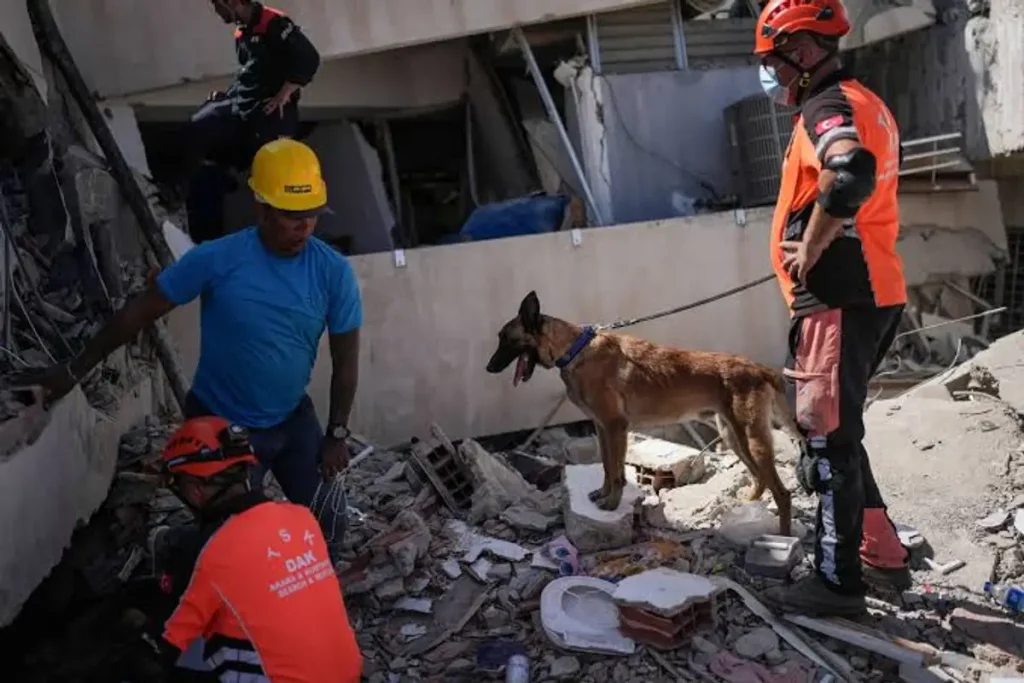
Canine rescue teams from across the globe have been officially honoured by the government of Venezuela following the devastating twin earthquakes that struck the country’s northern coast in June 2026. These extraordinary search dogs and their dedicated handlers worked tirelessly under dangerous conditions to locate and extract survivors trapped beneath concrete ruins.
Table of Contents
- 1. Venezuela’s Deadliest Earthquake in Over a Century
- 2. How Canine Rescue Teams Searched the Rubble
- 3. Inspiring Stories of Tsunami, Xukip, and Muunek
- 4. Acting President Delcy Rodriguez Presents Medals of Merit
- Comparison of International K9 Deployments to Venezuela
- Frequently Asked Questions (FAQ)
1. Venezuela’s Deadliest Earthquake in Over a Century
On June 24, 2026, two powerful earthquakes measuring 7.2 and 7.5 magnitude struck Venezuela’s northern coast just 39 seconds apart. The devastating seismic events collapsed residential buildings across Caracas, La Guaira, and Catia La Mar, leaving thousands of victims missing under the rubble.
With more than 1,700 confirmed dead and tens of thousands displaced, local authorities immediately requested international humanitarian aid. International agencies quickly mobilized resources, dispatching specialized teams to assist with wide-area reconnaissance and emergency operations.
In the crucial first hours, the deployment of international canine rescue teams proved to be the most effective asset in finding survivors. According to urban search specialists, a trained dog can search a collapsed building in 30 minutes, a task that would take human crews without sight lines up to 7 hours to complete.
2. How Canine Rescue Teams Searched the Rubble
At the request of the Venezuelan government, 44 international search and rescue teams deployed 2,245 specialists and 140 search dogs to the disaster zones. These highly specialized canine rescue teams relied on the animals’ highly trained sense of smell to locate people buried beneath layers of heavy concrete.
“The search dogs are extraordinary partners because they detect human scent by identifying the temperature, body odor, and carbon dioxide exhaled by trapped victims.”
— Dr. Erika Flores, IFAW Program Officer for Animal Rescue
Before each search began, handlers would ask the surrounding crowds for total silence to allow the working dogs to focus. Once a dog marked a positive hit, technical crews used acoustic listening devices to pinpoint the survivor’s exact location before starting heavy extraction.
Local rescue organizations noted that the presence of these canine rescue teams brought profound hope to grieving families waiting near the collapsed buildings. Their speed and precision helped turn what seemed like impossible odds into lifesaving triumphs.
3. Inspiring Stories of Tsunami, Xukip, and Muunek
Among the many four-legged heroes, an 8-year-old Border Collie named Tsunami captured the hearts of millions across Venezuela. Tsunami, who was rescued from abandonment as a puppy, worked alongside his handler Jorge Beens to locate at least 13 survivors trapped under the rubble in Caracas.
The June 2026 deployments also featured incredible international canine responders, including Muunek, a Border Collie from Mexico’s BRIC Urban Search and Rescue team. Muunek worked alongside her handler Jan Uribe through highly unstable disaster zones in the hardest-hit coastal areas.
These international canine rescue teams also included a dedicated contingent from Vietnam, featuring a standout search dog named Xukip. During his first overseas mission, Xukip consistently demonstrated exceptional scent-detection abilities, repeatedly guiding rescuers to trapped citizens.
Additionally, Sisu, a brown Labrador retriever with Florida Task Force 2, tackled her missions with boundless energy, proving essential in the race against time. Together, these dogs showed unmatched courage, working through more than 600 aftershocks to save lives.
4. Acting President Delcy Rodriguez Presents Medals of Merit
In recognition of their outstanding contributions, the Venezuelan government organized a special ceremony to honour the international canine rescue teams. Acting President Delcy Rodriguez personally visited the rescue bases to thank the teams and present them with official letters of appreciation.
During the ceremony, Acting President Rodriguez awarded the Medal of Merit to the outstanding search dog units. Four-year-old Xukip, representing the Vietnamese rescue contingent, was chosen to wear the medal on behalf of his unit, symbolizing the deep international gratitude of the Venezuelan people.
Local animal welfare groups, including Red de Apoyo Canino, have also expanded emergency veterinary response efforts to care for displaced pets. By supporting both human and animal survivors, the international community has laid the groundwork for Venezuela’s long road to recovery.
The extraordinary dedication shown by these canine rescue teams has reinforced the ancestral and legendary bond between humans and search dogs. As some international contingents prepare to return home, their heroic efforts in Venezuela will be remembered for generations to come.
Comparison of International K9 Deployments to Venezuela
The table below highlights some of the key international contingents and canine rescue teams that provided crucial aid following the June 2026 earthquakes:
| Country / Team | Dogs Deployed | Notable K9 Heroes | Primary Search Area | Key Achievement |
|---|---|---|---|---|
| Venezuela (K-SAR ECID) | Local Units | Tsunami | Caracas (San Bernardino) | Located 13 survivors; Tsunami’s final mission before retirement. |
| Mexico (BRIC / Army) | Specialized Units | Muunek | Coastal landslide zones | Assessed highly unstable concrete structures safely. |
| Vietnam (Border Guard) | 8 Dogs | Xukip | La Guaira & Catia La Mar | Consistently located human scents; awarded Medal of Merit. |
| United States (FL-TF2) | Specialized Dogs | Sisu, Piper | Caracas Metro Area | Piper rescued 2 survivors in her first active mission. |
The swift coordination between these diverse international canine rescue teams and local civil protection units was crucial to the success of the mission.
Frequently Asked Questions (FAQ)
Q1: Why did the Venezuelan government honour the canine rescue teams?
Answer: The government officially honoured the international canine rescue teams because of their extraordinary scent-detection efforts, which allowed emergency crews to quickly locate and extract survivors trapped under heavy concrete after the devastating June 2026 earthquakes.
Q2: Which international teams participated in the rescue mission?
Answer: Over 29 countries dispatched more than 2,400 personnel and 188 search dogs. Key participants included teams from Mexico, Vietnam, the United States, Spain, the Netherlands, Colombia, Cuba, and El Salvador.
Q3: What makes search dogs more effective than human search crews?
Answer: Search dogs can scan a collapsed building and detect signs of life in approximately 30 minutes. In contrast, human rescue crews using standard methods would require up to 7 hours to complete the same area without direct sight lines.