
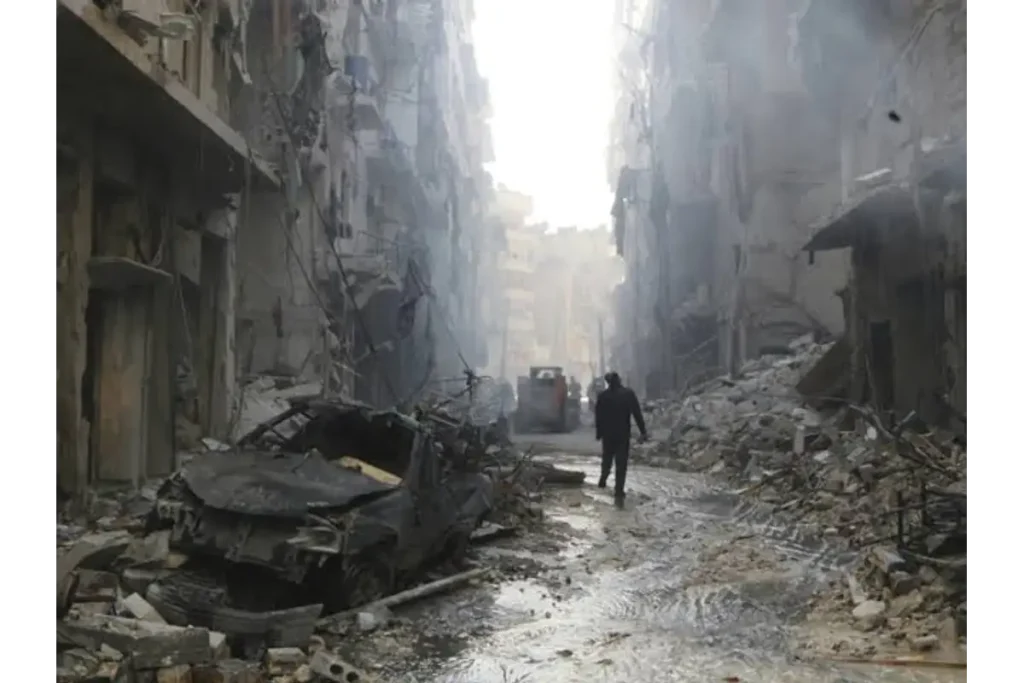
Damascus bomb blasts have shaken the Syrian capital, wounding at least 18 people near the hotel where French President Emmanuel Macron was staying during his historic diplomatic visit on Tuesday. The twin explosions, which occurred shortly after the French leader’s motorcade departed for the presidential palace, have underscored the deep security challenges facing Syria’s new post-Assad administration.
Table of Contents
- 1. Twin Explosions Disrupt Landmark European Visit
- 2. French President Unharmed as Diplomatic Talks Press Ahead
- 3. Persistent Security Challenges Under Syria’s New Leadership
- 4. Rebuilding Initiatives: Key Agreements Signed Despite the Attacks
- Recent Security Incidents and Diplomatic Milestones in Syria
- Frequently Asked Questions (FAQ)
1. Twin Explosions Disrupt Landmark European Visit
The sudden Damascus bomb blasts occurred in a highly active and central area of the capital, positioned between the Syrian Ministry of Tourism and the National Museum. The location sits directly across the street from the Four Seasons Hotel, where President Macron and his delegation had spent the night.
Syria’s Interior Ministry confirmed that the explosions were caused by crude devices, with one hidden inside a trash bin and the second planted in a parked vehicle nearby. The bombs reportedly detonated while civil security forces were attempting to safely neutralize and dismantle them.
“I saw three traffic police officers injured on the ground before the area was quickly evacuated and the surrounding roads were closed.”
— Hamam Hammoud, Local Eyewitness and Financial Worker
The casualties included four police officers among the 18 wounded, though thankfully no fatalities have been reported from the immediate scene. The impact of these Damascus bomb blasts was felt across several commercial blocks, shattering windows of nearby offices and tourism facilities.
2. French President Unharmed as Diplomatic Talks Press Ahead
The French presidency, the Élysée, confirmed that President Macron did not hear the explosions as he had already departed the hotel to meet with Syrian President Ahmed al-Sharaa. Despite the immediate danger presented by the Damascus bomb blasts, Macron chose to proceed with his scheduled itinerary without modifications.
Immediately after the blasts, hotel security took precautionary measures, instructing members of civil society groups who had met with Macron earlier that morning to seek shelter in the garage. Meanwhile, the French President arrived safely at the presidential palace, walking the red carpet to meet with al-Sharaa’s delegation.
The Élysée reiterated that France’s commitment to the Syrian peace process remains unwavering despite the disruption. Addressing the incident on social media, Macron emphasized that nothing would derail the aspirations of the Syrian people to establish a secure and sovereign nation.
3. Persistent Security Challenges Under Syria’s New Leadership
The timing of these Damascus bomb blasts underscores the fragile security environment in Syria following the historic ousting of Bashar al-Assad in late 2024. President Ahmed al-Sharaa, a former Islamist commander, has spent the last year working to normalize Syria’s international relations and rebuild its shattered economy.
However, the new government faces persistent threats from remnant extremist factions, including the Islamic State, which has claimed multiple recent attacks against government positions. Only days prior to Tuesday’s blasts, a separate explosion at a Damascus cafe claimed the lives of 10 civilians, illustrating the ongoing threat of guerrilla tactics in urban centers.
While the Syrian security forces have launched a full investigation, these Damascus bomb blasts serve as a stark reminder of the remaining security gaps in urban areas. Local authorities are intensifying their search for those responsible, as no group has immediately claimed responsibility for the targeted explosions near the French delegation’s hotel.
4. Rebuilding Initiatives: Key Agreements Signed Despite the Attacks
Despite the tense atmosphere created by the Damascus bomb blasts, France and Syria successfully advanced several economic and developmental agreements during the bilateral forum. Macron, who was accompanied by a large delegation of French CEOs, expressed France’s willingness to help revive Syria’s banking sector and infrastructure.
A notable partnership was signed between Syria and the French shipping giant CMA CGM, focusing on air cargo freight handling at Damascus International Airport. Additionally, the French presidency announced a process to return approximately €51 million ($58.3 million) in confiscated assets to the Syrian state.
This landmark visit—the first by an EU head of state since 2009—signals a massive shift in European foreign policy, aimed at encouraging the new Syrian leadership to protect minorities and transition to a pluralistic government.
Recent Security Incidents and Diplomatic Milestones in Syria
As Syria attempts to rebuild its international reputation, it faces a complex balance between diplomatic progress and localized security challenges. The table below outlines recent key events:
| Event / Milestone | Date | Location | Impact / Outcome | Geopolitical Significance |
|---|---|---|---|---|
| Justice Palace Cafe Bombing | Early July 2026 | Damascus Cafe | 10 killed, 20 wounded | Highlighted lingering urban security threats from extremist remnants. |
| French President’s State Visit | July 6-7, 2026 | Damascus Airport & Palace | Bilateral agreements signed | First EU head of state visit to Syria since the 2024 transition. |
| Targeted Hotel Explosions | July 7, 2026 | Four Seasons Damascus | 18 wounded, no fatalities | Unsuccessfully targeted/disrupted President Macron’s official visit. |
These developments indicate that while major diplomatic breakthroughs are taking place, localized insurgency elements continue to actively challenge the government’s security apparatus.
Frequently Asked Questions (FAQ)
Q1: What caused the Damascus bomb blasts on July 7, 2026?
Answer: The Damascus bomb blasts were caused by two explosive devices: one hidden inside a vehicle and another planted in a nearby garbage container. The explosions occurred while security forces were attempting to dismantle the devices.
Q2: Was French President Emmanuel Macron injured in the attack?
Answer: No, President Emmanuel Macron was completely unharmed. He had already left the Four Seasons Hotel in a secure motorcade and was arriving at the presidential palace to meet Syrian President Ahmed al-Sharaa when the explosions occurred.
Q3: What was the primary purpose of President Macron’s visit to Syria?
Answer: President Macron’s visit focused on supporting Syria’s economic rebuilding efforts, promoting French investment, restoring confiscated assets, and encouraging Syria’s new leadership to protect minorities and maintain regional stability.