
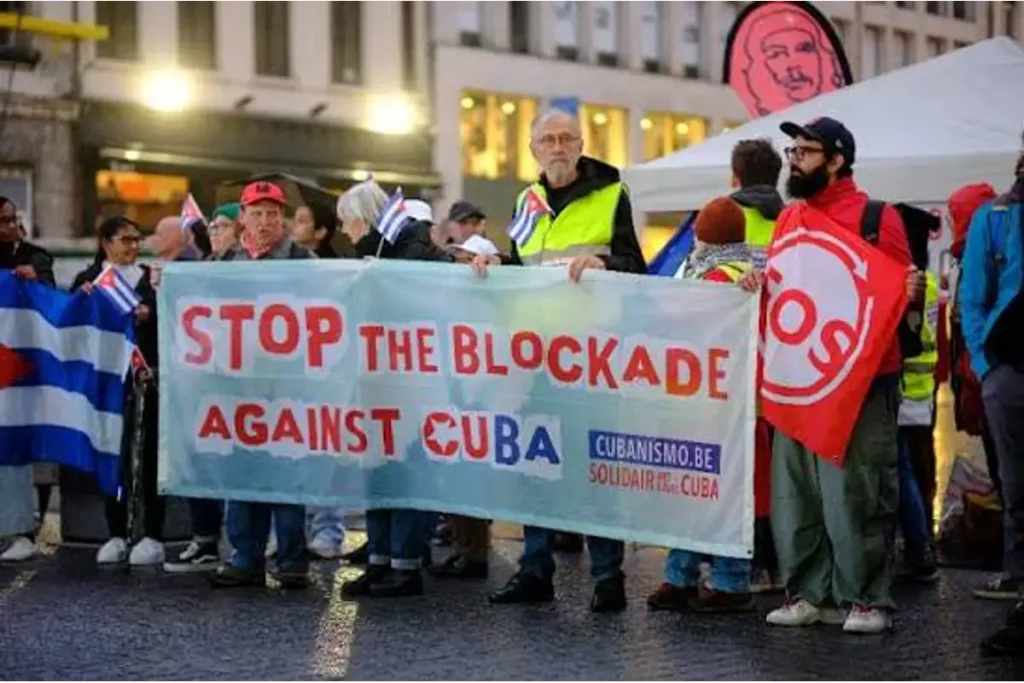
The U.S. embargo on Cuba has once again taken center stage at the United Nations General Assembly in New York, as delegates convened a rare early session on Tuesday to address the island’s worsening humanitarian and energy crisis. Amid escalating tensions between Washington and Havana, member states clashed over the economic blockade, which Cuban officials argue is pushing their nation to the brink of complete socioeconomic collapse.
Table of Contents
1. A Rare Early Convening Amid Severe Island Deprivation
The United Nations General Assembly typically reviews the economic, commercial, and financial sanctions against Havana in late autumn. However, at Cuba’s urgent request, the world body gathered on Tuesday, July 7, 2026, due to critical shortages of fuel, medicine, and electricity on the Caribbean island.
Diplomats warning of “unacceptable” civilian suffering argued that the tightened U.S. embargo on Cuba has severely paralyzed local infrastructure. UN human rights chief Volker Türk recently highlighted that the broad, indiscriminate effects of these sanctions packages violate fundamental principles of international human rights law.
“Children are dying because doctors lack access to essential medical supplies and medicines. This severe socioeconomic blockade must be addressed under international law.”
— UN Human Rights Chief Volker Türk
The longstanding U.S. embargo on Cuba, first established in 1960, remains the most enduring trade blockade in modern history, severely impacting all sectors of the Cuban economy. Critics of Washington’s foreign policy point out that the combination of severe energy crises and natural disasters, such as the devastating Hurricane Melissa, has crippled the island.
Supporters of the resolution emphasize that the extraterritorial reach of the U.S. embargo on Cuba prevents other nations from engaging in normal, legal commerce.
2. Accusations of “Pressure, Blackmail, and Threats”
Before the start of the session, diplomatic friction peaked when Cuban Foreign Minister Bruno Rodríguez Parrilla accused Washington of actively undermining the multilateral debate.
According to Cuban officials, the United States has deployed a systematic campaign of diplomatic pressure to prevent member states from attending or voting in favor of ending the U.S. embargo on Cuba.
Rodríguez Parrilla strongly condemned these actions, asserting that the blockade is not just a policy but a “crime against humanity.” On the other hand, U.S. representatives maintain that the trade restrictions are necessary to support democracy, promote human rights, and hold the ruling government accountable for domestic economic mismanagement.
Despite the severe rhetoric, U.S. diplomats argue that the U.S. embargo on Cuba includes humanitarian exemptions for food and critical medical aid, though third-party banks often refuse to process transactions out of fear of heavy penalties.
3. The Geopolitical Divide: Shifting Alliances and Voting Records
While the non-binding resolution historically enjoys overwhelming global backing, recent voting patterns show noticeable shifts in international alliances.
In the last major vote in late 2025, the General Assembly adopted the resolution calling for an end to the U.S. embargo on Cuba with 165 votes in favor, 7 against, and 12 abstentions.
A group of European nations, including Poland and Romania, chose to abstain in the previous vote, citing Cuba’s geopolitical alignment with Russia and its reported support during the conflict in Ukraine. This growing division demonstrates that the debate over the U.S. embargo on Cuba is increasingly being shaped by wider global conflicts and shifting security pacts.
Historical General Assembly Votes on the Cuba Blockade
The United Nations General Assembly has consistently voted to condemn the trade blockade. The table below outlines key voting trends and shifting alignments over recent sessions:
| UNGA Session / Year | Votes in Favor (To End Embargo) | Votes Against | Abstentions | Notable Opposition Countries |
|---|---|---|---|---|
| 79th Session (2024) | 187 | 2 | 1 | United States, Israel |
| 80th Session (2025) | 165 | 7 | 12 | U.S., Israel, Argentina, Ukraine, Paraguay |
| Special Session (July 2026) | Ongoing Debate | TBD | TBD | U.S. lobbying efforts intensifying |
The increasing number of votes against the resolution and abstentions in recent years reflects the growing impact of geopolitical alliances and security agreements outside the Western hemisphere.
Frequently Asked Questions (FAQ)
Q1: What is the U.S. embargo on Cuba, and why was a special session called?
Answer: The U.S. embargo on Cuba is a comprehensive set of economic and commercial trade restrictions first established in 1960. The UN General Assembly convened an early, rare debate on July 7, 2026, at Havana’s request due to a severe, unprecedented domestic energy crisis and humanitarian suffering on the island.
Q2: Why are some countries shifting their votes or abstaining now?
Answer: Several European nations, including Poland and Romania, chose to abstain during the recent session, citing Cuba’s close alignment with Russia and its reported support during the conflict in Ukraine. These geopolitical alliances have introduced new dynamics into the annual vote.
Q3: What are the main arguments presented by the United States?
Answer: The U.S. delegation maintains that its economic sanctions are aimed at encouraging democratic reforms, supporting civil liberties, and keeping pressure on a government that they accuse of structural economic mismanagement.