
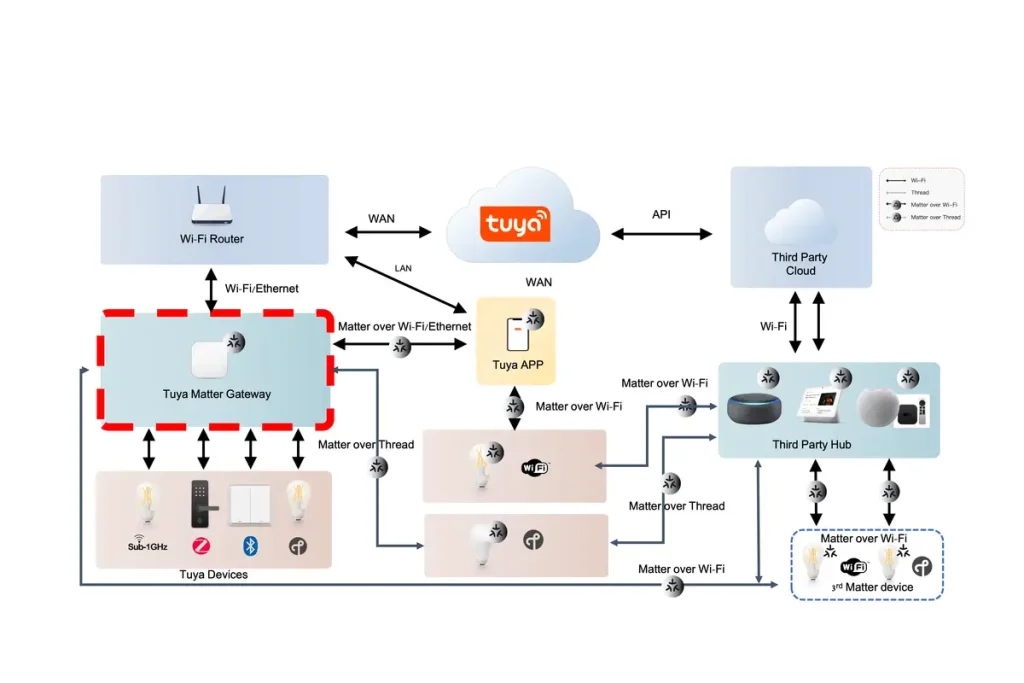
Achieving true local device control has officially taken center stage in smart home technology following the launch of the highly anticipated Matter 3.0 ecosystem. Introduced by the Connectivity Standards Alliance (CSA) in July 2026, this massive upgrade allows certified devices to operate fully offline, eliminating the need for constant cloud connectivity and third-party servers. Homeowners can now control their smart locks, security cameras, and lighting networks entirely within their local home network, ensuring absolute privacy and seamless operations during internet outages.
Table of Contents
The Era of Offline Smart Homes: What Offline Processing Means
For years, smart home enthusiasts have complained about the fragility of cloud-reliant devices. If a manufacturer’s server went down or the home’s broadband connection dropped, basic functions like turning on lights or unlocking the front door became impossible.
The Matter 3.0 release addresses these frustrations by shifting all processing commands from distant data centers directly onto local smart hubs. Smart appliances, sensors, and controllers now communicate entirely locally, allowing users to maintain local device control even when their internet service provider suffers a massive outage.
The 3 Technical Upgrades Driving Offline Autonomy
This major ecosystem update introduces three pivotal upgrades designed to maximize stability and speed. First, local network discovery has been optimized, allowing controllers to instantly detect and pair with offline devices over Thread and Wi-Fi networks.
Second, the framework enhances “shared fabrics” capabilities, which ensures that local device control is not hindered by heavy cloud latency. Finally, local security key rotations have been integrated, allowing devices to authenticate each other securely within the home without needing validation from external servers.
Local-First vs. Cloud-Reliant Smart Homes
To understand the tangible benefits of local device control, it is helpful to look at how offline-first systems outperform older, cloud-reliant protocols. The physical speed and security advantages of local network processing are undeniable.
| Feature Comparison | Cloud-Dependent Systems | Matter 3.0 Local-First System |
|---|---|---|
| Device Execution Speed | 200ms – 2 Seconds (Depends on Internet) | Instantaneous (Sub-15 milliseconds) |
| Local Device Control Protocol | No (Fails immediately when offline) | Yes (100% Operational Offline) |
| Data Privacy Level | Vulnerable (Requires cloud transmission) | Maximum (Data never leaves the home) |
| Vendor Interoperability | Highly restricted by brand lock-in | Universal (Apple, Google, Amazon, etc.) |
What the Experts Say: A New Standard for Home Automation
While some manufacturers previously relied on proprietary bridges to lock users into subscription models, the push for standardized local device control forces an industry-wide pivot. Industry leaders recognize that consumer trust hinges on system reliability.
“The launch of the Matter 3.0 ecosystem removes the single point of failure that has plagued IoT for a decade. By moving smart hubs to a local-first architecture, we are ensuring that the smart home of tomorrow remains functional, secure, and entirely under the user’s control.”
As smart locks, thermostats, and lighting adapters update to support the new specifications, users will witness a significant drop in latency. The next phase of development will focus on scaling local device-to-device automation without requiring cloud routers.
Frequently Asked Questions
Does Matter 3.0 support local device control when the internet is completely down?
Yes. The core architecture of Matter 3.0 ensures that all automation triggers, commands, and device communications happen within your local Wi-Fi and Thread networks without requiring external cloud servers.
What hardware is required to enable local device control in my home?
You will need a compatible Matter Controller (such as an Apple HomePod, Google Nest Hub, or Home Assistant Green) which serves as the local routing brain for all offline-first devices.
Do existing Matter devices automatically get updated to the new standard?
Many modern Thread and Wi-Fi smart accessories can be updated to Matter 3.0 via over-the-air (OTA) firmware updates, though compatibility depends on individual manufacturer support.