
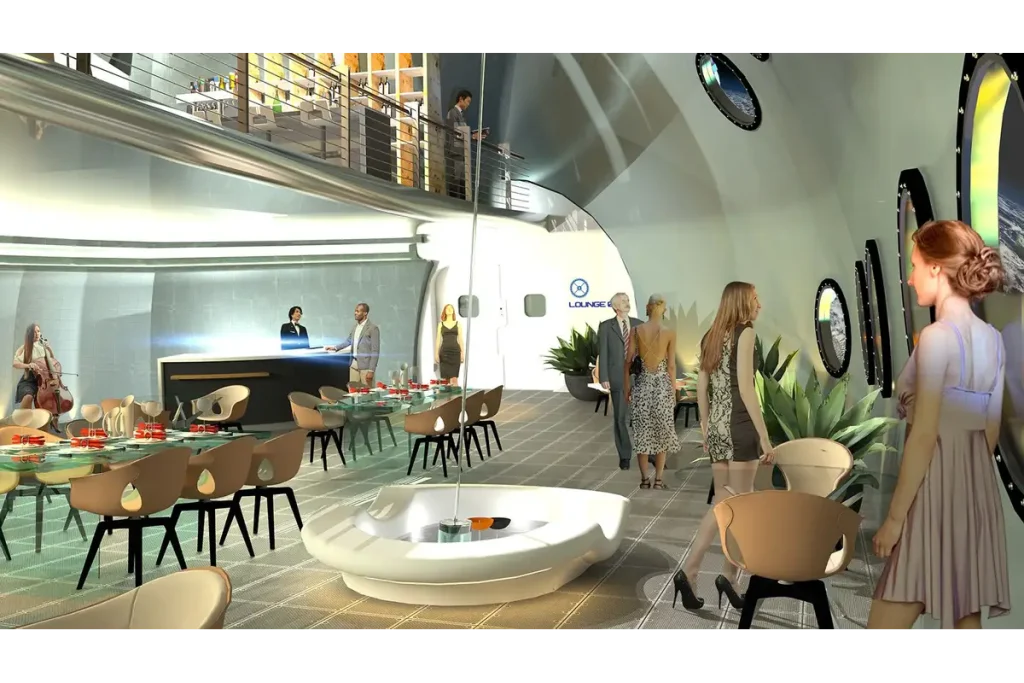
The race for commercial space flight has entered a luxurious new phase as the first-ever orbital space hotel officially opens reservations for its highly anticipated late-2027 launch. Developed by Above Space Development Corporation (formerly Orbital Assembly), the rotating Voyager Station has officially begun accepting booking applications from wealthy private citizens and sovereign space agencies. Representing a critical leap from low-Earth orbit research to commercialized tourism, this multi-billion-dollar project aims to combine the comforts of a high-end Earth resort with the thrilling, once-in-a-lifetime adventure of weightlessness and orbital viewing.
Table of Contents
The Dawn of Extraterrestrial Leisure: Inside the Orbital Space Hotel Experience
For over half a century, living in space has been the exclusive domain of highly trained governmental astronauts residing in cramped, sterile laboratory modules. However, the commercialization of aerospace transport has finally paved the way for civilian-oriented vacation habitats.
The Voyager Station aims to overcome the physical limitations of microgravity by constructing a rotating orbital space hotel that leverages centrifugal force to simulate lunar-like artificial gravity. By spinning at a calculated angular speed, the 200-meter-wide ring-shaped habitat allows guests to walk, eat, and use standard restrooms comfortably without floating away.
Gourmet Space Cuisine, Low-Gravity Basketball, and Earth Views
To deliver a luxury resort experience, the developers of this orbital space hotel have finalized blueprints for a multi-functional gymnasium, a health spa, and a cinema. The station’s central restaurant will feature a menu that blends traditional space classics like freeze-dried ice cream with fresh, bi-weekly gourmet food deliveries.
Recreational activities will take advantage of the reduced gravitational force, allowing visitors to jump up to six times higher inside a seven-meter-high sports arena. Meanwhile, luxury bar lounges positioned along the outer ring will offer panoramic views of the curving Earth, slowly rotating against the dark void of space.
Commercial Space Tourism vs. Scientific Research Outposts
Evaluating the operational parameters of an orbital space hotel against the International Space Station (ISS) highlights the fundamental shift from scientific utility to tourist luxury. The modular station represents a major departure from legacy zero-gravity habitats.
| Design Metric | International Space Station (ISS) | Voyager Station (Orbital Hotel) |
|---|---|---|
| Simulated Gravity Level | Zero-Gravity (Microgravity environment) | 1/6th Earth’s Gravity (Lunar-like) |
| Interoperability of the Orbital Space Hotel | Strictly scientific (Government agencies only) | Commercial & Scientific (Open to public) |
| Maximum Guest Capacity | 6 – 11 Astronauts | 400 People (280 guests, 112 crew) |
| Primary Interior Design Focus | Functional, sterile, instrument-packed | Vibrant luxury, soft textures, Earth views |
What the Experts Say: A New Era for the Orbital Economy
While some aerospace analysts question whether the astronomical price tag is sustainable, booking agents confirm that early interest in the orbital space hotel has already exceeded expectations. The initial market is heavily driven by ultra-high-net-worth individuals and corporate partners looking for unique marketing avenues.
“We are trying to make the public realize that this golden age of space travel is just around the corner. It is coming, and it is coming fast. This is not just a resort; it will be the catalyst for the next industrial revolution in low-Earth orbit.”
As the construction of modular components continues in terrestrial facilities, space tugs and heavy-lift rockets are preparing to haul the first structural rings into orbit. If the timeline holds, late 2027 will go down in history as the exact moment humanity turned low Earth orbit into an inhabited tourist destination.
Frequently Asked Questions
How much does a stay at the orbital space hotel cost?
While official pricing varies based on custom itineraries, early estimates place the cost of a three-day luxury stay at Voyager Station at approximately $5 million per passenger.
How does Voyager Station simulate gravity?
The wheel-shaped hotel rotates constantly in low Earth orbit. This rotation generates centrifugal force, simulating a lunar-like gravity level (approximately 1/6th of Earth’s gravity) along the outer ring.
When will the orbital space hotel open for bookings?
In July 2026, the developers officially opened the early application and reservation process, preparing the infrastructure to welcome its first commercial guests in late 2027.