
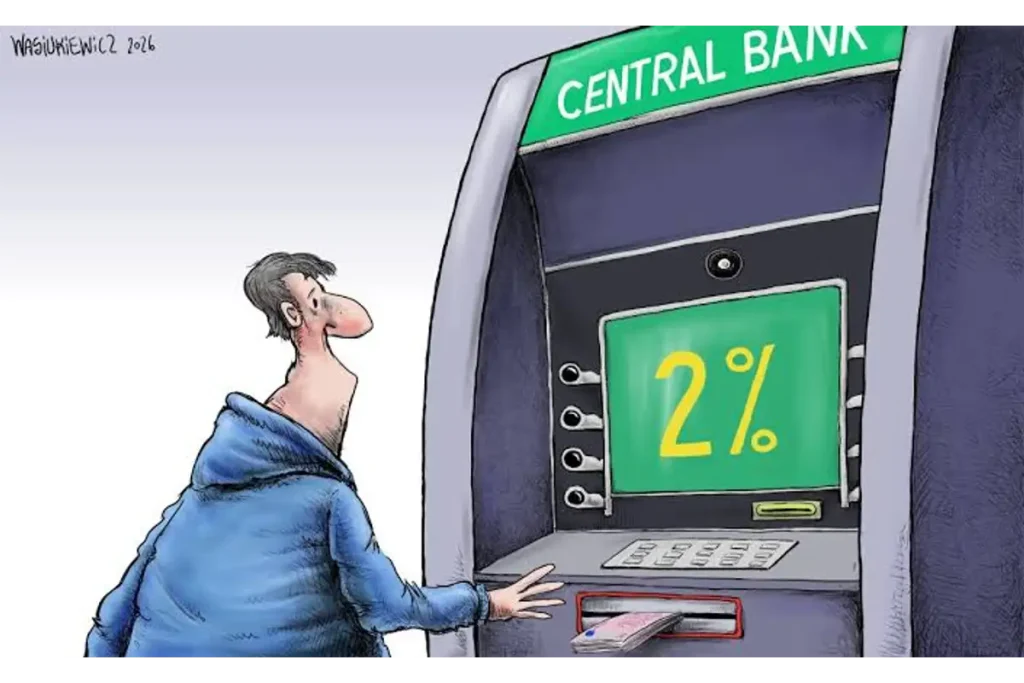
The path of core global inflation has finally begun to stabilize in July 2026, prompting a wave of cautious optimism among major central bankers who gathered last week in Sintra, Portugal, to coordinate monetary policy. Despite lingering pressures from the recent Middle East energy shock, fresh economic indicators suggest that the aggressive tightening cycle of the past year is finally cooling consumer demand.
Table of Contents
- 1. Moderate Relief: June Data Shows Core Global Inflation Cooling
- 2. Falling Energy Costs and the Strait of Hormuz Factor
- 3. Federal Reserve and ECB Set Firm Inflation Targets
- 4. High Borrowing Costs Are Here to Stay
- Key Regional Inflation Metrics: July 2026 Analysis
- Frequently Asked Questions (FAQ)
The latest harmonized consumer price index reports have provided a highly anticipated benchmark for asset managers and corporate treasury offices, offering a vital indicator of where core global inflation is headed in the third quarter of 2026.
1. Moderate Relief: June Data Shows Core Global Inflation Cooling
The most encouraging signals came from the Eurozone, where preliminary June Consumer Price Index (CPI) reports revealed that headline and core inflation slowed more than expected to 2.8% and 2.4%, respectively. This positive result has significantly softened the near-term pressure on European Central Bank (ECB) policymakers to pursue further restrictive rate hikes.
Similarly, the United States saw a stabilization in consumer sentiment alongside a gradual moderation of raw core goods pricing, bringing significant relief to policymakers who feared that core global inflation would spiral out of control. While the battle against rising prices is far from over, the latest figures suggest that corporate profit margins are normalizing as supply chain friction eases.
“Preliminary inflation data were not too far from expectations, but we still need to wait for full information. We are keeping all options open for upcoming meetings.”
— Boris Vujčić, European Central Bank Vice President
Bundesbank President Joachim Nagel echoed this careful stance, noting that while signs of stabilization are emerging, it remains far too early to declare victory. He emphasized that domestic services inflation and solid labor wage agreements continue to present upside risks to the baseline outlook.
2. Falling Energy Costs and the Strait of Hormuz Factor
The primary driver behind the stabilization of headline numbers has been the gradual easing of global crude oil and natural gas prices. Following a highly volatile spring that pushed Brent crude to wartime highs of $126 per barrel, the reopening of transit routes in the Strait of Hormuz has brought crude back down toward $73 per barrel.
This decline in fuel costs has direct disinflationary effects, reducing transport, manufacturing, and shipping surcharges for global retail brands. Lower energy overheads are relieving pressure on household purchasing power, and this partial relief is expected to slowly pull down core global inflation in the coming months.
However, geopolitical analysts warn that the situation remains fragile, as any sudden escalation in regional disputes could quickly restrict transit capacity and reignite energy price spikes.
3. Federal Reserve and ECB Set Firm Inflation Targets
During a high-profile panel at the Sintra Forum in Portugal, Federal Reserve Chair Kevin Warsh signaled a firm and uncompromising stance on restoring price stability. Warsh stated that anchoring core global inflation back to the 2% target remains the Fed’s primary focus, emphasizing the central bank’s absolute independence from external political pressures.
ECB President Christine Lagarde adopted a similarly determined tone, suggesting that upside risks to economic growth and price momentum are currently more broadly balanced than they were a few weeks ago. Both institutions are strictly following a data-dependent and meeting-by-meeting approach, refusing to offer concrete forward guidance to financial markets.
The unified front from Western central banks sends a clear warning to market participants who expect rapid rate cuts before the end of the year. Both the Fed and the ECB are prepared to maintain tight monetary conditions for as long as necessary to ensure inflation expectations do not become unanchored.
4. High Borrowing Costs Are Here to Stay
While some economists remain hawkish, the stabilization of core global inflation suggests that borrowing costs have reached their terminal peak for this economic cycle. However, according to recent projections from Bloomberg Economics, the fallout of the recent Middle East conflict has shifted the path for central bank interest rates higher for years to come.
Average borrowing costs across advanced economies are expected to remain up to half a percentage point higher through 2028 compared to pre-war forecasts. This reality means that businesses and homebuyers must adjust to a prolonged period of expensive loans, requiring strategic adjustments needed to ensure that core global inflation does not face a second-round shock.
By keeping borrowing costs elevated, central banks aim to absorb excess capital and guide the global economy toward a sustainable, low-inflation soft landing.
Key Regional Inflation Metrics: July 2026 Analysis
The table below provides a comparative look at the latest harmonized consumer price indexes and central bank targets, representing the shifting trajectories of core global inflation across key advanced economies:
| Economic Region / Central Bank | Headline Inflation Rate (June 2026) | Core Inflation Rate (June 2026) | Official Inflation Target | Projected Rate Path (Q3-Q4 2026) |
|---|---|---|---|---|
| United States (Federal Reserve) | 4.1% | 3.8% | 2.0% | Rates to remain stable; no rapid cuts expected. |
| Eurozone (European Central Bank) | 2.8% | 2.4% | 2.0% | All options open; live meetings with data dependence. |
| United Kingdom (Bank of England) | 3.2% | 2.9% | 2.0% | Cautious holding pattern with strict labor wage monitoring. |
While the Eurozone appears closest to its medium-term objective, core measures across all three regions remain slightly above the ideal 2.0% baseline.
Frequently Asked Questions (FAQ)
Q1: What factors contributed to the stabilization of core global inflation in July 2026?
Answer: The stabilization was driven primarily by a significant reduction in global energy costs following the reopening of the Strait of Hormuz. Lower fuel prices helped cool headline indexes, allowing core global inflation to stabilize as supply chain pressures and shipping costs moderated.
Q2: Why are central banks expressing cautious optimism rather than declaring a full victory?
Answer: Central banks remain highly vigilant because underlying components, particularly services inflation and rising wages in the labor market, continue to run above target. Additionally, geopolitical uncertainties in energy corridors represent persistent upside risks.
Q3: What are the current interest rate expectations for the rest of 2026?
Answer: Major central banks like the Federal Reserve and the European Central Bank have adopted a strict data-dependent, meeting-by-meeting approach. Markets expect rates to remain elevated for a prolonged period, with very few, if any, rate cuts projected before 2027.